Harness2 by Google Research – Recursive Agent Harnessing
github.com
October 19, 2026
4 min read
45/100
Summary
Google Research has released Harness², an Apache 2.0-licensed framework for improving the software harness around fixed AI models rather than changing model weights. The framework edits eight agent components: system prompts, guardrails, memory, tool guidance, subagents, skills, scripts, and plugins. It uses a Propose–Probe–Compose process to test candidate harness edits on a task and create a refinement from differences in their behavior without ground-truth feedback. Harness² also retains adopted harnesses and evidence-supported lessons from completed tasks to inform later refinements. Parallel recursion evaluates multiple candidates more broadly, while sequential recursion carries a refined harness through successive steps. The project supports OpenCode and Codex executors and the JobBench, LAB, and WorkBuddy-Bench professional-task benchmarks. Google Research says one Harness² step improved GLM-5 and Gemini 3.5 Flash over base harnesses by up to 11.5 points on WorkBuddy-Bench, 4.5 points on JobBench, and 11.8 percentage points in LAB partial-pass rate; larger task-level recursion budgets produced further gains. The software requires Linux, Python 3.12, and uv, while model-backed runs also require model credentials and can incur API costs. Executor network access is unrestricted by default, and Codex runs with its sandbox disabled; users are warned to configure restrictions before evaluations because public benchmark answers or grading rubrics may be accessible online.
Key Takeaways
- Harness² improves agent behavior by recursively modifying the prompts, tools, memory, skills, orchestration, and other harness components around a fixed model.
- The framework supports parallel candidate exploration and sequential multi-step refinement through its Propose–Probe–Compose process.
- Google Research reports gains of up to 11.5 points on WorkBuddy-Bench, 4.5 points on JobBench, and 11.8 percentage points on LAB for GLM-5 and Gemini 3.5 Flash configurations.
- Harness² supports OpenCode and Codex executors, but its default executor networking is unrestricted and Codex operates without its sandbox enabled.
What the discussion said
The thread barely debates the research claims themselves; it mostly reacts to the project’s opaque presentation and to the familiar idea behind it. One explanation reduces Harness² to a feedback loop: when an agent hits an unfamiliar situation, a person corrects the behavior and the harness records that correction for later reuse. Several readers say that is sensible, but hardly novel. They describe already updating prompts, skills, and agent behavior from prior runs, with some teams automating those updates alongside code changes. The implied value is packaging that iterative adaptation into a reusable framework for open-ended tasks, rather than leaving every team to build its own memory-and-correction loop. The stronger mood is irritation at how little the repository makes that value tangible. Readers wanted one runnable end-to-end workflow showing an agent encounter a new task, receive a correction, and improve on the next attempt. Instead, they saw abstract language, benchmark-focused visuals, and an animated overview that felt aimed at selling results rather than teaching adoption. The AI-generated-looking imagery sharpened the cynicism: commenters saw a project about recursively expanding agent behavior wrapped in presentation they considered automated, low-substance noise. A paper link offers more technical context, but it does not resolve the demand for a concrete demonstration.
Where opinion split
The central dispute is whether Harness² is a meaningful general-purpose advance or merely a formal label for standard agent iteration. Supporters see a reusable system for carrying human corrections into genuinely unforeseen tasks; skeptics argue practitioners already refine prompts and skills from previous runs, so the project must prove what its framework adds with a runnable example.
Coverage & discussions
Hacker News · github.com
Community discussions
Community Sentiment
Positives
- Capturing human corrections after an agent fails on an unfamiliar task could turn one-off supervision into behavior the system reuses on the next similar encounter.
- Some readers recognize the core workflow as practical enough that teams are already automating prompt and skill updates as their agent code evolves.
- The linked paper gives technically curious readers a clearer route into the method than the repository’s marketing-heavy surface.
Concerns
- The recursive-harness framing struck several readers as dressed-up terminology for the commonplace practice of learning from previous agent runs.
- Without a runnable end-to-end example, the project never demonstrates the crucial claim that corrections reliably improve agents on later open-world tasks.
- Benchmark slides and vague visuals make the release feel optimized for signaling research performance rather than enabling developers to test real agent adaptation.
- AI-generated-looking README art fed the impression of automated promotional clutter surrounding an already hard-to-grasp agent framework.
Related Articles
Harness Engineering 101: The LLM is the brain, the harness is the body
Oct 19, 2026
Prime Agent: A self-improving RLM agent
Aug 5, 2026
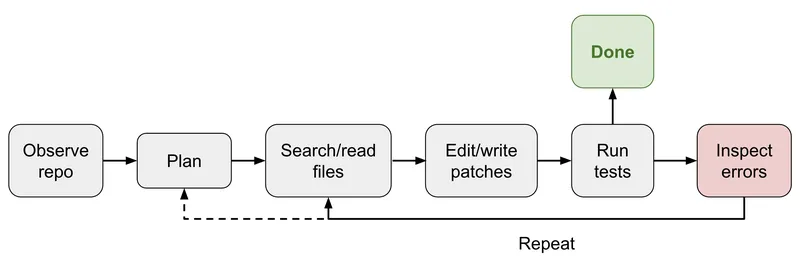
Harness Engineering for Self-Improvement
Aug 4, 2026

The Harness Is the Thing
Aug 26, 2026
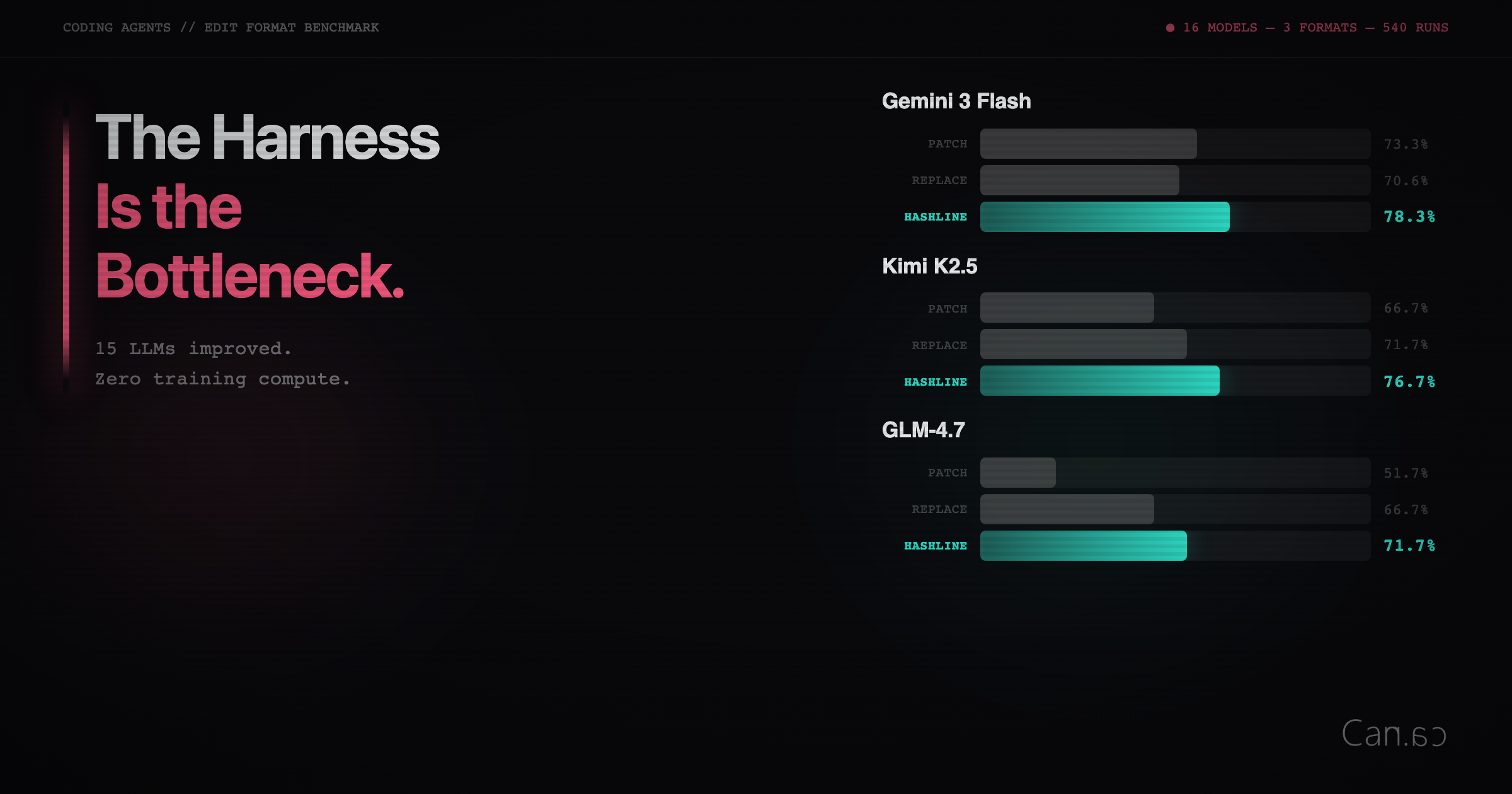
Improving 15 LLMs at Coding in One Afternoon. Only the Harness Changed
Feb 12, 2026