Top stories
Story · 1 report
Anthropic S-1
An SEC filing link identifies Anthropic, PBC and an S-1 document labeled “Q2.” The source provides no filing details, financial figures, dates, business information, or statements from Anthropic. The link was posted by SiNTEx and had a score of 1,064 points and 989 comments at the time reflected in the source.
sec.gov
🔥🔥🔥🔥🔥1 min summary
10/26/2026
Story · 1 report
Anthropic trained Claude on illegally obtained Stanford professors' books
A federal ruling in Bartz v. Anthropic found that Anthropic used illegally obtained books, including works by more than 10 Stanford professors, to build a permanent central library for training Claude models. Judge William Alsup barred Anthropic from pirating books for that library but held that training large language models on legally acquired books qualifies as fair use, comparing the process to a human reader learning from a work’s themes and style. A $1.5 billion settlement in the case covers authors and publishers of nearly 500,000 registered works, or roughly $3,000 per work. Stanford professor emeritus Tobias Wolff, whose 10 publications were used without permission, and Stanford English professor Chang-rae Lee opted out. In May 2026, they joined Cruz v. Anthropic, a separate lawsuit seeking a jury trial, statutory damages of up to $150,000 per infringed work, and a permanent injunction against training Claude on their works. The plaintiffs allege Anthropic downloaded, reproduced and stored copyrighted books from shadow libraries including LibGen and PiLiMi. More than 70 copyright suits have been filed against AI companies by authors, artists and news organizations, including The New York Times and Getty Images. The Authors Guild is also pursuing litigation and federal licensing requirements for books used in AI training.
stanforddaily.com
🔥🔥🔥🔥🔥2 min summary
10/27/2026
Story · 1 report
Claude Duet
Claude Duet is Anthropic’s proactive AI agent that handles work through messages, operates on its own cloud computer, and contacts users when a task is complete or requires a decision. Powered by Opus 5.5, it is available as a research preview through a waitlist for Claude Pro and Max subscribers in the United States; Team and Enterprise plans are not included. Claude Duet is offered as a standalone iOS and Android app and is accessible on the web at claude.ai. The agent uses a customer’s Claude account, including its memory, skills, and connected apps, and retains conversation history in one thread. It can produce morning briefs, identify inbox and calendar items requiring attention, draft replies, schedule meetings, build dashboards, and return work such as documents, spreadsheets, and slide decks. It can also find unpaid invoices and draft reminders, prepare payroll for review, and ready contracts for sending. Claude Duet requires approval before sensitive actions such as sending messages or making payments. Approvals, logins, and safety checks run in the user’s cloud computer, and users can review and steer its activity. Its background checks count against a subscriber’s Claude usage limits, with larger tasks consuming more model turns and background work. Anthropic says the preview may misread threads, misjudge urgency, or miss items that arrive between check-ins.
claude.com
🔥🔥🔥🔥🔥2 min summary
10/21/2026
Story · 1 report
Anthropic blocks users for anything touching training larger models
Jiahao Shao accused Anthropic of wrongly flagging his account for “training a competitor” despite his claim that he never distilled Claude. Shao said rollouts used in his work came from a strong open-source model, while Claude was used only to submit jobs and run analysis. Shao said the restriction now blocks activity involving reinforcement fine-tuning, supervised fine-tuning, or training larger models. He also reported that Claude Opus 5.5 is downgraded to Opus 5 and that some sessions are terminated outright. Shao criticized Anthropic for treating paying users conducting research automation as adversaries while building models on broadly available data.
twitter.com
🔥🔥🔥🔥🔥1 min summary
10/31/2026
Story · 1 report
OpenAI and Anthropic cut their LLM prices by up to 80% within a few months. Why?
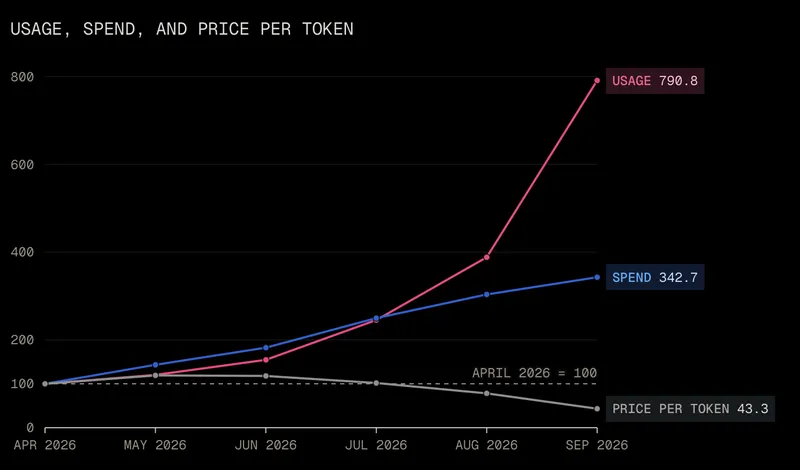
OpenAI and Anthropic cut prices for several leading language models between June and September 2026, with reductions reaching 80% for some services. OpenAI lowered GPT-5.6 Luna from $1/$6/$0.10 to $0.20/$1.20/$0.02 per million input, output, and cache-read tokens on July 30, then launched GPT-6 Luna at $0.10/$0.50/$0.01 on September 22. GPT-6.1 Sol, released September 29 after GPT-6 Sol drew weak performance feedback, cost $2/$10/$0.10 and was described as comparable in performance to GPT-6 Astra. Anthropic made Claude Sonnet 5’s $2/$10/$0.20 launch pricing permanent and priced Claude Opus 5.5 at $4/$20/$0.20, saying the model requires less compute to serve than Opus 5. The source attributes the cuts partly to direct competition and pressure from open-weight models and numerous inference hosts. DeepSeek Flash V4.1 was priced by DeepSeek at $0.15/$0.60/$0.003, while OpenRouter listed 29 providers for the model’s updated variant. The source says cache-read charges dominate token spending in coding-agent workloads, estimating that cache reads account for 96% to 99% of expenditure; Anthropic’s 75% cache-read reduction for Fable 5.1 could therefore reduce total usage costs by roughly 70% to 75%. It also cites improved inference efficiency as a possible contributor to lower prices.
minimaxir.com
🔥🔥🔥🔥🔥1 min summary
10/25/2026
Story · 1 report
Anthropic hacked to deliver remote access trojan
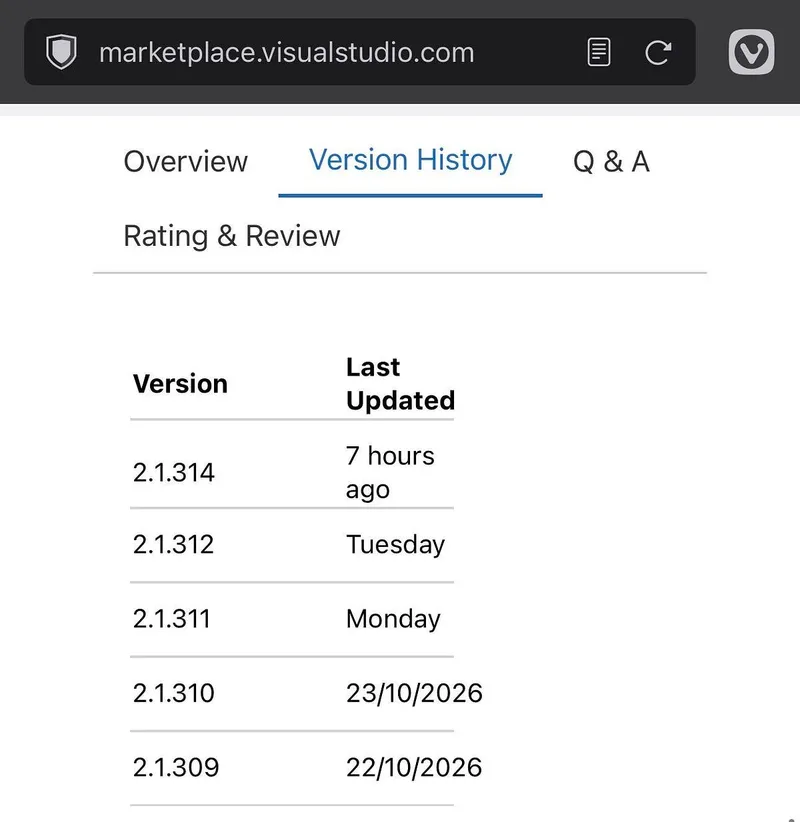
Cursor said a maliciously modified version of Anthropic’s Claude Code extension was published in its VS Code extension marketplace and attempted to install a persistent SSH backdoor on developer computers. Cursor estimated that about 5,000 developer systems were affected. The compromised extension version, 2.1.313, was replaced by version 2.1.314 roughly eight hours later, according to the report; version 2.1.313 is no longer listed on OpenVSX, Visual Studio Marketplace, or Cursor. Cursor said the malicious code collected host and user details including hostname, username, operating system, architecture, home-directory path, environment-variable names, working directories, configured Git email, and public IP address. It attempted to add an attacker-controlled SSH key to authorized_keys, enable local SSH access, and establish a reverse SSH tunnel. Cursor said coding errors meant those steps would generally fail unless Cursor had been launched with administrator privileges. The malware also tried to persist through macOS LaunchAgents or Windows scheduled tasks and sent host details and backdoor status to an HTTP beacon endpoint. The report identified 134.209.82.225 as the reverse-tunnel and command-and-control address and published hashes for affected macOS and Windows VSIX packages.
doublepulsar.com
🔥🔥🔥🔥🔥1 min summary
10/30/2026
Story · 1 report
Anthropic's internal AI use, at retail prices, now exceeds its employee pay
Anthropic disclosed in its IPO filing that the retail value of Claude AI used internally exceeded its monthly employee compensation costs, excluding stock awards, in April. The figure values internal Claude consumption at the prices Anthropic charges customers rather than representing cash spending on AI. Internal AI usage, measured on that basis, rose more than 250-fold between January and September. Claude generated more than 90% of the code added to Anthropic’s software in September, according to the filing. Anthropic’s revenue has also grown much faster than its headcount. The company’s internal-use figures illustrate how AI tokens, a measure of model usage, are increasingly being considered alongside salary, bonuses, and stock awards when assessing the resources used by technology companies and their employees.
businessinsider.com
🔥🔥🔥🔥🔥1 min summary
11/2/2026
Story · 1 report
Anthropic may not secure investment-grade rating after IPO, Blackstone says
Blackstone has told investors that Anthropic may not obtain an investment-grade credit rating after a potential initial public offering, according to the Financial Times headline. The source provides no details on the timing, size, structure or expected valuation of any Anthropic IPO. The available text also does not specify Blackstone’s reasoning, identify the investors who received the information, or state whether Anthropic has sought a rating. It contains no financial metrics, debt plans, credit-rating agency assessments or response from Anthropic. The Financial Times page requires a subscription to access the full report.
ft.com
🔥🔥🔥🔥🔥1 min summary
10/30/2026
Story · 1 report
Early progress on accelerating drug development with Claude
Anthropic has formed drug-development research partnerships with BigHat Biosciences, Bristol Myers Squibb, Divergence Labs, Enveda, Generate Biomedicines and The Column Group, while also acquiring rare-disease startup Mithril Medicine. The company is using Claude across target assessment, molecule design, laboratory-data analysis, manufacturing documentation, regulatory filings and clinical-trial planning. Most of the work remains preclinical, meaning the candidate drugs have generally not yet been tested in humans. In one Generate Biomedicines project, Claude Code helped design a CAR T-cell genetic component about 70% shorter than a standard version; Generate reported that lab tests produced roughly 10 times as many cancer-recognizing receptors and improved tumor-cell killing. Divergence Labs used Claude to generate about 35,000 antibody designs in a month for food-allergy treatment, identifying early binding and IgE-dislodging candidates. BigHat tested roughly 1,010 Claude-guided antibody-fragment variants in 10 weeks, reporting improvements including more than 10-fold tighter binding and over 100-fold slower clumping. Enveda reported that Claude found all 11 documentation issues detected by human reviewers plus seven additional issues across 1,061 pages, reducing review time from more than 25 hours to under three. Anthropic plans to expand clinical-trial work with Bristol Myers Squibb in 2027. Mithril’s founder used Claude to coordinate work with 11 external labs; Anthropic expects a muscular-dystrophy candidate could be ready for human clinical trials as soon as late 2028 if results continue to hold up.
anthropic.com
🔥🔥🔥🔥🔥2 min summary
10/27/2026
Story · 1 report
Anthropic reports $17B in Q3 revenue, commitments of $895B in revised S-1
Anthropic disclosed updated third-quarter financial results and infrastructure commitments in an amended Form S-1 filed with the U.S. Securities and Exchange Commission. The company generated roughly $17 billion in third-quarter revenue, up about 1,127% year over year, and $33.24 billion during the nine months ended September 30, roughly 1,200% higher than a year earlier. Third-quarter revenue grew about 47% from the prior quarter, compared with 144% growth in the second quarter and 132% in the first quarter. Anthropic reported a third-quarter net loss of $23.29 billion and a nine-month net loss of $104 billion; it said most of the nine-month loss stemmed from changes in the fair value of convertible notes and derivative liabilities. Anthropic has entered purchase commitments and lease agreements totaling about $895.4 billion, substantially all for compute and infrastructure. Compute and infrastructure expenses increased by $14.4 billion in the first nine months of the year, a 329% increase from the same period last year. The five-year-old Claude developer is preparing for a potential initial public offering after publishing its prospectus last week. Its filing identifies political, infrastructure, safety and commercial risks, while its co-founders said they view mitigating risks from AI models as a personal responsibility.
cnbc.com
🔥🔥🔥🔥🔥1 min summary
11/2/2026