Top stories
Story · 1 report
Microsoft and Epic Games Suddenly Agree That AI Is Theft
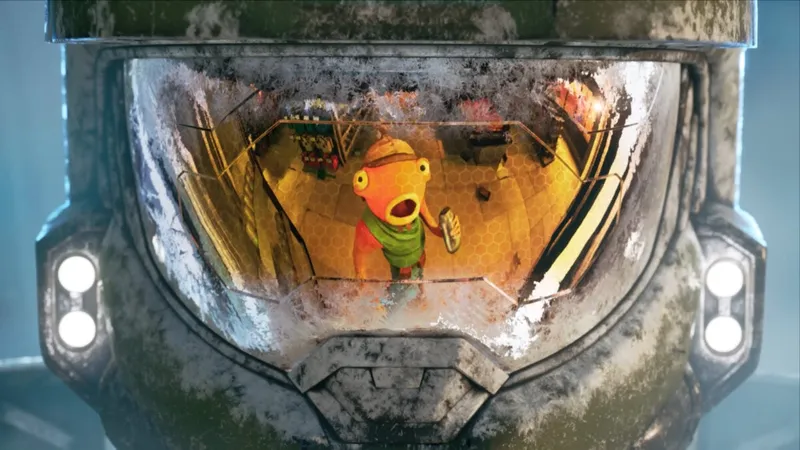
Microsoft and Epic Games have issued DMCA takedown notices against AI-assisted browser ports and recreations of their games while also investing in or using generative AI tools. Epic issued a DMCA notice against a browser-based Fortnite recreation on October 10, 2026. Microsoft issued multiple notices during the preceding month involving browser ports related to Minecraft, Call of Duty, and Halo. GitHub’s DMCA logs also recorded recent takedowns involving open-sourced versions of Slay the Spire 2, Celeste, and RimWorld. Epic is developing an upcoming Disney/Marvel game with Anthropic’s Claude, according to Bloomberg. Anthropic agreed in September 2025 to pay $1.5 billion over claims involving illegally obtained BitTorrent data; the company was required to delete the data but was not required to delete or retrain models built with it. Epic’s terms prohibit using code or content extracted from its licensed products as training input for generative AI programs. Microsoft has committed $80 billion annually to AI data centers, while Activision used AI-generated artwork in Call of Duty: Black Ops 6 and Black Ops 7. Epic CEO Tim Sweeney said on October 27 that Epic does not permit uncompensated use of Fortnite intellectual property and restricts AI training on Unreal Engine and MetaHuman outputs, though Epic is working to remove the latter restriction from its EULA. Sweeney said Anthropic’s torrenting was found infringing, while model training itself was found to be fair use in that case.
kotaku.com
🔥🔥🔥🔥🔥2 min summary
10/28/2026
Story · 1 report
Microsoft Decision-1: 9B Qwen Model Launch Explained
Microsoft introduced Microsoft-Decision-1 on October 9, 2026, a specialized model that scores predefined answer choices rather than generating text. Built by post-training Alibaba’s 9-billion-parameter open-weight Qwen3.5-9B model, it returns calibrated probability scores for tasks including routing, classification, prioritization, verification and workflow control. It supports text inputs of up to 32,000 tokens but does not provide written explanations or process images, audio or video. Microsoft said future versions will be rebased on Microsoft AI and OpenAI models. The model launched in public preview through Microsoft Foundry and became available on OpenRouter as microsoft/microsoft-decision-1. Its weights are not distributed, limiting use to hosted APIs. OpenRouter and secondary reports list pricing at $0.042 per million input tokens with no output-token charge. Microsoft said Decision-1 achieved 83.5% accuracy across 36 benchmarks containing roughly 150,000 held-out questions, and reported approximately 35 times lower P50 latency than GPT-6 Sol and 4.5 times faster performance than Quyet-1.0-Large; those results have not been independently reproduced. Microsoft also reported 98.7% perturbation stability and said it is testing the model internally for incident response, quality control and scientific discovery. Xbox Research reportedly used it to categorize more than 10,000 feedback items into predefined themes.
shattered.io
🔥🔥🔥🔥🔥1 min summary
10/26/2026
Story · 1 report
New AI Is More Than Twice as Good at Diagnosing Diseases as Doctors
Microsoft’s AI Diagnostic Orchestrator, or MAI-DxO, achieved 83.2% diagnostic accuracy on complex cases from The New England Journal of Medicine, compared with 36.1% for generalist physicians using reference materials. Physicians without those materials scored about 22%. In a separate emergency-department admissions test, MAI-DxO scored 80.3%, versus 46.8% for generalist physicians. Microsoft reported its strongest results with OpenAI’s GPT-5 and additional improvements with GPT-5.5. MAI-DxO begins with a patient’s chief complaint, then sequentially selects follow-up questions and diagnostic tests before reaching a conclusion. It assigns AI agents roles including proposing diagnoses, choosing tests, challenging assumptions, and weighing costs. Microsoft said simulated-case estimates indicated the system reached diagnoses using fewer tests and procedures at roughly half to one-third of the cost, though those estimates were not actual medical expenses. The findings, first posted as an arXiv preprint last year, have been published in Science. Microsoft AI chief Mustafa Suleyman said real-world use would require clinical testing. Dr. Dominic King, Microsoft’s AI health lead, said testing was expected to begin at Beth Israel Deaconess Medical Center in Boston within months. The researchers said the performance gap would likely narrow against specialist physicians rather than generalists, and medical experts have said diagnostic benchmark performance does not establish that AI should replace doctors.
gizmodo.com
🔥🔥🔥🔥🔥2 min summary
10/23/2026

No more articles to load