Top stories
Story · 1 report
Modders unlock hidden AI power on Nvidia RTX 20, 30, and 40 series GPUs, nearly doubling some benchmarks
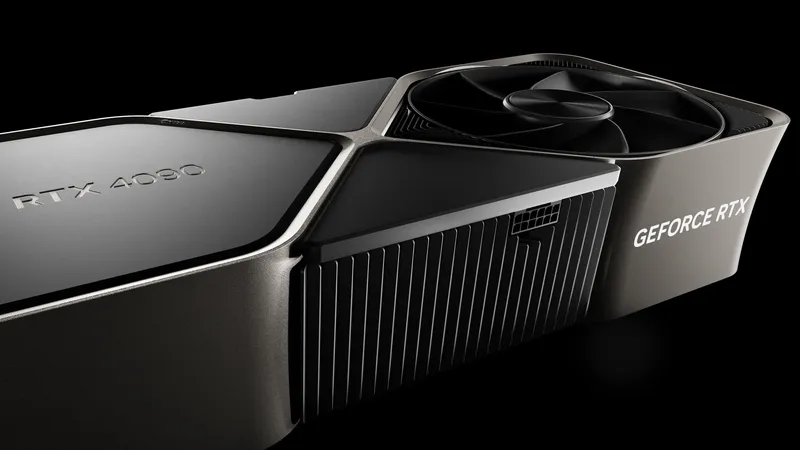
Open-source tools claim to unlock higher tensor-core throughput on Nvidia GeForce RTX 20-, 30-, and 40-series GPUs by removing a performance limit applied to certain AI calculations. On these cards, FP16 or BF16 operations that accumulate results in FP32 run at half the rate of FP16-accumulate mode, while workstation GPUs using the same chips, such as Nvidia's RTX A6000, run the FP32-accumulate mode at full speed. The changes chiefly target AI training, inference prompt processing, image generation, and fine-tuning rather than games or chatbot token generation. GitHub user Zagitta's Linux kernel module, gpu-unlock, runs before Nvidia's driver loads, rewrites two GPU speed-selection registers, and resets the card without requiring a VBIOS flash or driver patch. On a 450W RTX 3090 Ti, its developer measured BF16 throughput rising from 87.5 to 157.4 TFLOPS and a near doubling in TF32 throughput, while FP16 increased 35%. Related projects include gpu-unlock-ada for RTX 40-series cards and turing-unlock for RTX 2080 Ti cards. gpu-unlock-ada doubled an RTX 4090's raw FP16 instruction rate from 165.6 to 331.6 TFLOPS, although independently tested real workloads gained 12% to 34%. Linux has most support; experimental Windows ports have been validated only on specific hardware. Developers differ on risk, with one warning sustained tensor-core use may damage hardware.
techspot.com
🔥🔥🔥🔥🔥2 min summary
3d ago
No more articles to load