1966 Ford Mustang Converted into a Tesla with Working 'Full Self-Driving'
electrek.co
May 4, 2026
4 min read
🔥🔥🔥🔥🔥
57/100
Summary
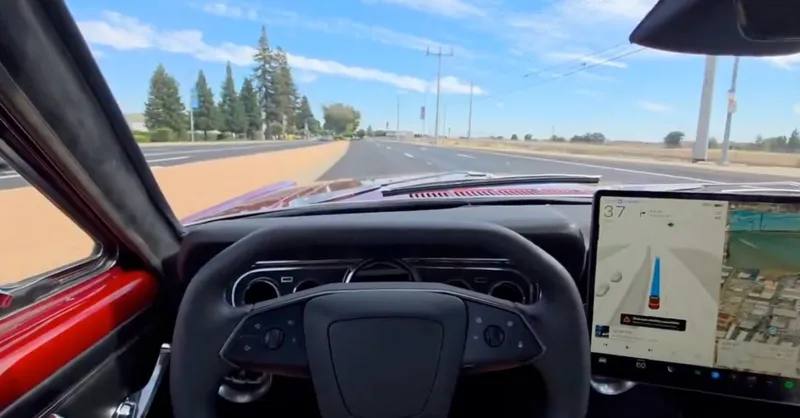
A 1966 Ford Mustang has been converted into a Tesla by a Sacramento auto parts shop owner, featuring a Model 3 dual-motor drivetrain, a 15-inch touchscreen, and functioning Full Self-Driving capabilities. The conversion cost approximately $40,000 and took two years to complete, achieving an efficiency of 258 Wh/mi, comparable to that of a Model 3.
Key Takeaways
- A 1966 Ford Mustang was converted into a Tesla using a Model 3 dual-motor drivetrain and features like a 15-inch touchscreen and working "Full Self-Driving" capabilities.
- The conversion project cost approximately $40,000 and took two years to complete, achieving an efficiency of 258 watt-hours per mile.
- This Mustang is likely the first non-Tesla vehicle to run Tesla's Full Self-Driving software, demonstrating the portability of Tesla's technology.
- The global vehicle conversion market was valued at $5.9 billion in 2024 and is projected to grow at 9% annually through 2034.
Community Sentiment
Positives
- The idea of separating drivetrain from body in the automobile market could revolutionize customization, allowing for more innovative electric vehicle designs.
- The project showcases the potential for retrofitting classic cars with modern EV technology, blending nostalgia with contemporary performance.
- The Mustang's lightweight design may contribute to its efficiency, demonstrating that older vehicles can be adapted for modern electric drivetrains.
Concerns
- The claim that the Mustang achieves similar efficiency to a Model 3 is implausible, given its less aerodynamic design and outdated safety features.
- Concerns arise that retrofitting classic cars may sacrifice efficiency for aesthetics, as the original designs were not intended for electric performance.
- The project may mislead consumers into thinking it incorporates Tesla's advanced software into a classic vehicle, rather than simply using a Tesla chassis.