Designing AI for Disruptive Science
asimov.press
March 23, 2026
20 min read
🔥🔥🔥🔥🔥
47/100
Summary
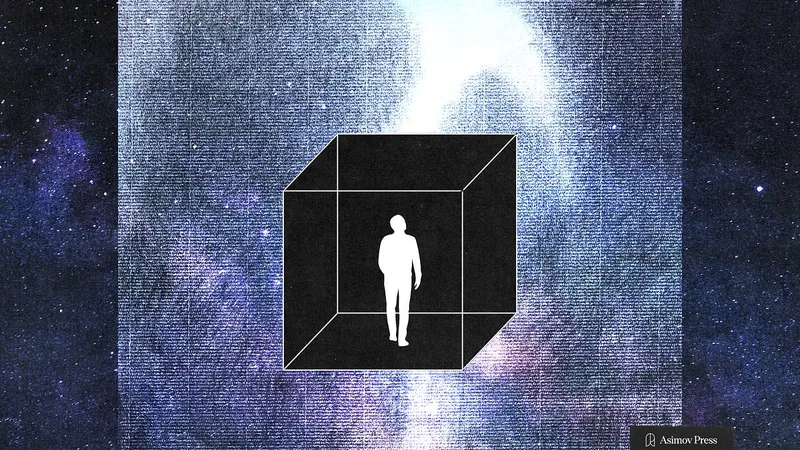
Scaling AI does not guarantee significant shifts in scientific paradigms. Excessive detail in knowledge representation can lead to inefficiencies and obsolescence, as illustrated by Borges's parable of an overly detailed map.
Key Takeaways
- Current AI systems excel at prediction within existing scientific frameworks but struggle to facilitate paradigm shifts that require new conceptual models.
- The evolution of scientific paradigms often involves simplifying complex phenomena into unified principles, as demonstrated by James Clerk Maxwell's equations for electricity and magnetism.
- There is a risk of "hypernormal science," where increasing detail in AI predictions leads to a diminished capacity for innovative questioning and understanding.
- To foster true scientific advancement, AI must be designed to encourage the development of new conceptual vocabularies rather than just improving predictive accuracy.
Community Sentiment
Concerns
- The current AI models may struggle with scientific concepts that are beyond practical applicability, raising concerns about their reliability in advancing scientific understanding.
- AI's tendency to hallucinate when pushed beyond known data points highlights a significant limitation, posing risks in scientific contexts where accuracy is crucial.
- The title of the article is perceived as clickbait, which undermines the seriousness of the discussion around AI's role in science.
Related Articles
AI Boosts Research Careers but Flattens Scientific Discovery
Jul 12, 2026
The AI revolution in math has arrived
Apr 13, 2026

The Social Edge of Intelligence: Individual Gain, Collective Loss
Apr 28, 2026
When Genius Fails: The Intellectual Arrogance of the AI Labs
Aug 14, 2026

The threat is comfortable drift toward not understanding what you're doing
Apr 5, 2026