Most tech revolutions made work worse for employees
thisandthat.chat
August 4, 2026
6 min read
52/100
Summary
Most technological revolutions have historically worsened work conditions for employees, leading to increased mundane tasks and longer office hours. Despite fears surrounding AI, there is a push for its adoption, with the belief that it may not follow the same detrimental pattern as previous technologies.
Key Takeaways
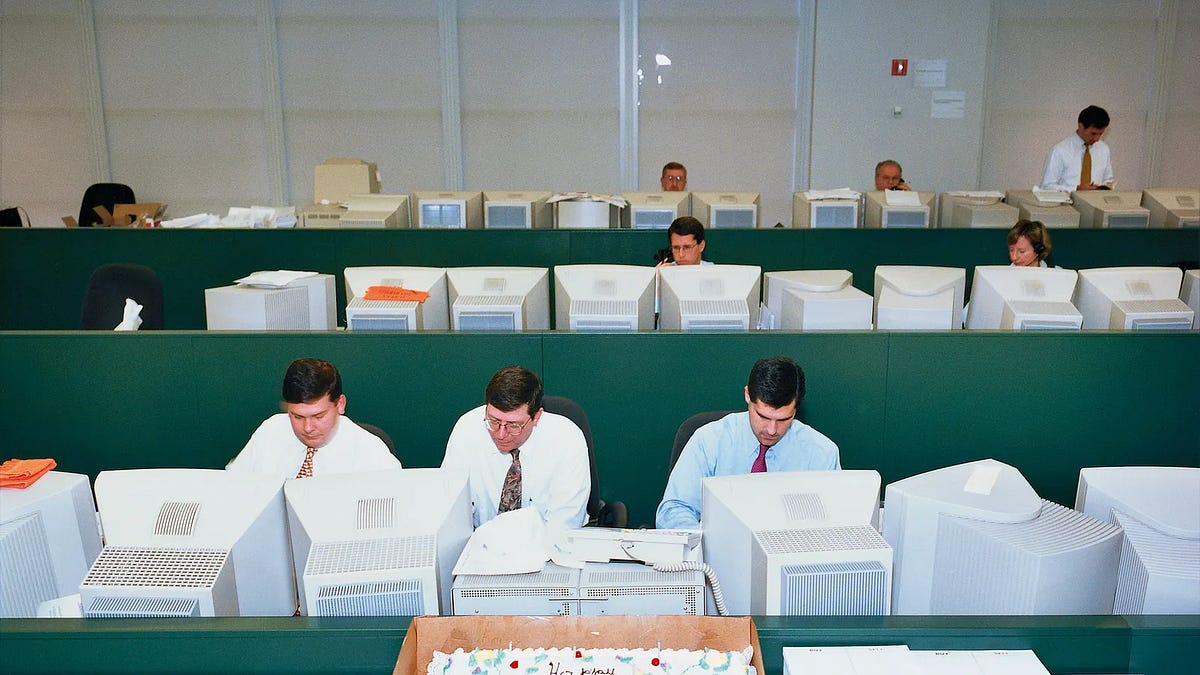
- Previous tech revolutions have often led to increased workloads and higher expectations for employees without corresponding benefits.
- AI has the potential to change this pattern by performing some of the work, potentially allowing employees to reclaim time for creative and collaborative tasks.
- The adoption of AI is currently causing role boundaries to blur, leading to increased intensity in work expectations.
- The productivity J-curve suggests that initial turmoil from adopting new technology may eventually lead to increased productivity if time savings are reclaimed effectively.
Community Sentiment
Positives
- Many commenters highlight that technological advancements like vacuum cleaners and sewing machines have historically made work easier, suggesting that not all tech revolutions have worsened conditions for employees.
- The introduction of mechanization in industries, like in Ford's plants, led to significant wage increases and improved working conditions, showing that progress can lead to tangible benefits for workers.
- Some argue that the mechanization of dangerous jobs, such as mining, has drastically reduced risks and labor intensity, making jobs safer and more bearable.
Concerns
- Commenters point out that while technology may improve efficiency, it often does not reduce the length of the workday, leaving employees with the same burdens despite labor-saving devices.
- There's a strong sentiment that management often implements new technologies without considering their actual impact on employees, leading to dissatisfaction and longer hours.
- Skeptics note that historical examples, like the industrial revolution, often resulted in worse conditions for workers, raising concerns about the true benefits of current technological advancements.
Related Articles

Everybody's Weirded Out by AI–Except the People Who Foist It on Us
Jul 17, 2026
I'm not worried about AI job loss
Feb 13, 2026

CEOs admit AI had no impact on employment or productivity
Apr 19, 2026

The solution might be cancelling my AI subscription
May 31, 2026

Sam Altman and Dario Amodei are both walking back AI jobs apocalypse predictions
May 28, 2026