On Labubu and the Hyperreal
2earth.github.io
May 27, 2026
14 min read
🔥🔥🔥🔥🔥
49/100
Summary
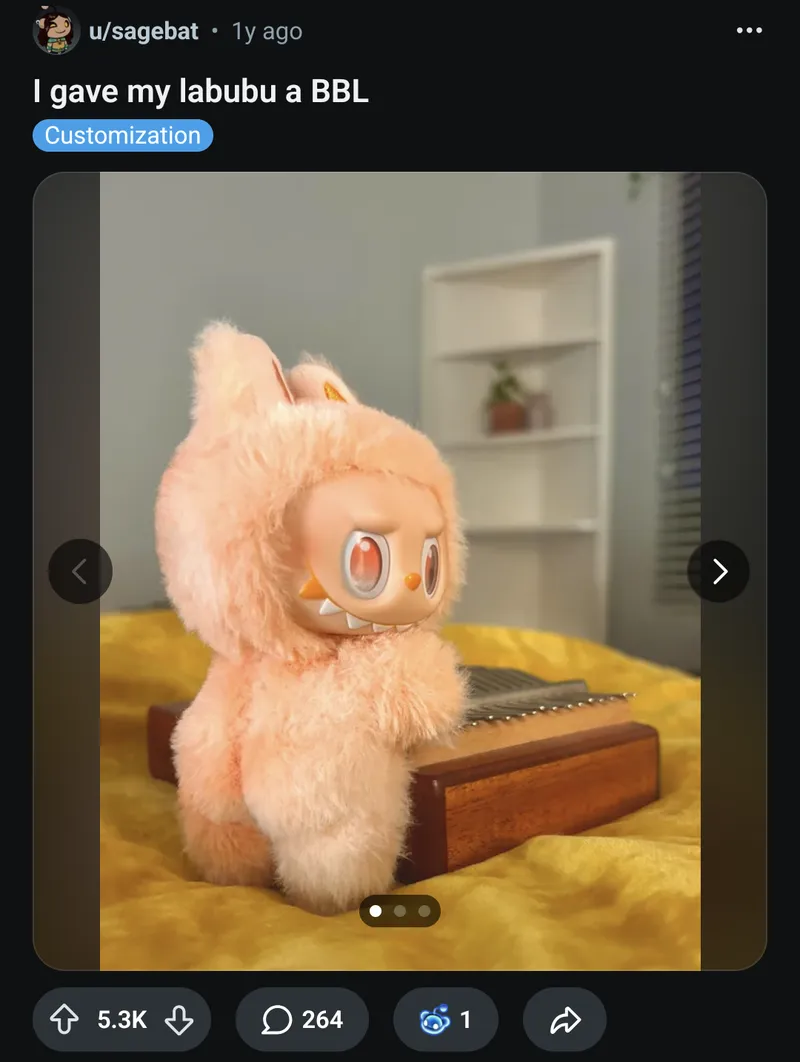
Labubu is a small, fluffy toy characterized by stubby arms, rabbit ears, a round body, and large eyes. The toy contrasts with masculine clothing, suggesting a statement about gender expression.
Key Takeaways
- Labubu is a plush toy created in 2015 by Kasing Lung and gained popularity after being acquired by POP MART in 2019.
- The rise of Labubu is linked to the COVID-19 pandemic, as it serves as a comforting companion for young adults experiencing isolation and nostalgia.
- Labubu's appeal is enhanced by cultural movements like Kawaii and K-Pop, particularly due to informal promotion by K-pop idol Lisa.
- The design of Labubu incorporates "baby schema" features, contributing to its charm and connection with adult consumers seeking comfort.
Community Sentiment
Positives
- Labubus and similar products represent a significant cultural phenomenon, reflecting how marketing strategies can successfully bridge Eastern and Western consumer behaviors.
- The joy children experience from engaging with products like Labubu highlights the emotional connections that toys can create, fostering happiness and creativity.
- The discussion around Labubus serves as a lens to examine societal trends and consumer behavior, providing insights into the motivations behind modern fads.
Concerns
- Many products that bring temporary happiness, like Labubus, contribute to plastic pollution, raising concerns about environmental sustainability and resource usage.
- The obsession with scarcity-driven trends, such as Labubus, often leads to wasteful consumption patterns, where items are bought for status rather than utility.
- The merging of reality and fiction in consumer behavior, especially among gaming communities, raises alarms about potential addiction to both products and AI-driven experiences.