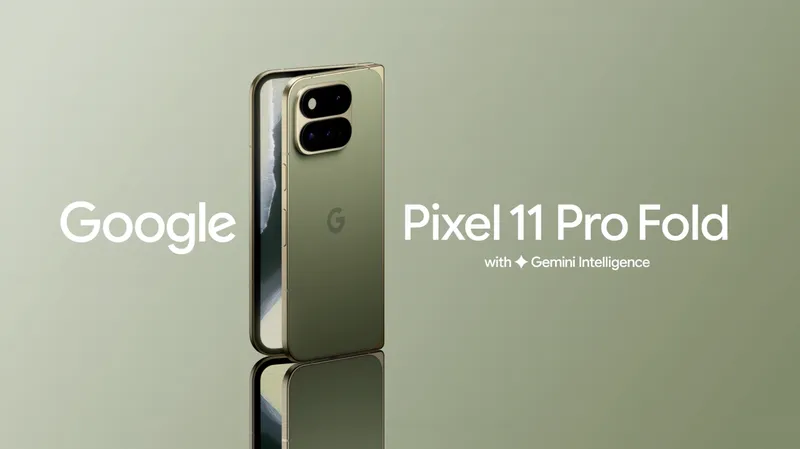
Pixel 11 Pro Fold feels like the end of an era
theverge.com
August 19, 2026
11 min read
49/100
Summary
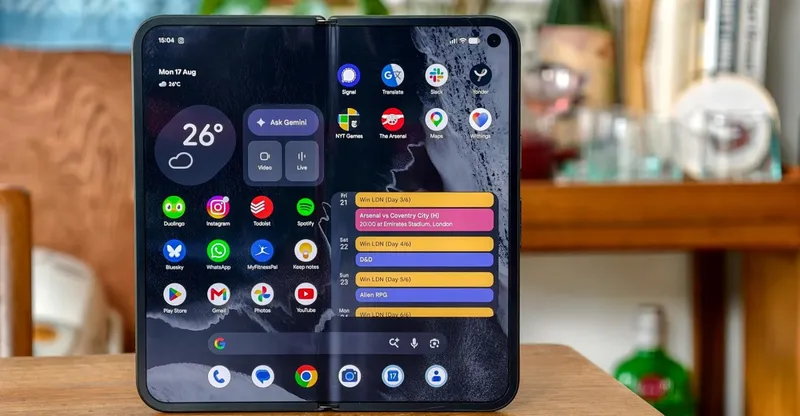
Google’s Pixel 11 Pro Fold is a $1,899 foldable phone with a Tensor G6 chip, 16GB of RAM, 256GB of starting storage, IP68 dust and water resistance, a triple rear-camera system, and 25W Qi2 magnetic wireless charging. It costs $100 more than the Pixel 10 Pro Fold, while retaining the same starting storage. The phone is 0.7mm thinner and 19g lighter than its predecessor, has OLED displays rated at up to 3,600 nits, and uses a larger 48-megapixel main-camera sensor. Its 4,806mAh battery routinely lasts a full day, according to testing. Google’s new Android 17 Bubbles feature lets apps run in floating, minimizable windows, with a dedicated dock on the unfolded display. Camera software additions include Camera Looks, Magic Capture, and Creator Suite tools such as an onscreen teleprompter and project-folder saving. Rambler converts extended dictated speech into concise summaries, while Proactive Assistance is unavailable in the UK and was difficult for US reviewers to trigger reliably. The Pixel 11 Pro Fold remains thicker and heavier than newer Samsung foldables, and its display crease is conspicuous. HiLight uses the camera flash as a multicolor Gemini indicator and a single-color alert for favorite callers, but it works only when the phone is face-down with its display off; message-alert support is planned for later. Google says its glass-fiber composite back is three times more durable and nearly impossible to crack.
Key Takeaways
- The Pixel 11 Pro Fold starts at $1,899 with 256GB of storage and 16GB of RAM; 512GB costs $120 more and 1TB costs a further $230.
- The phone adds a Tensor G6 processor, brighter 3,600-nit OLED displays, a larger 48-megapixel main-camera sensor, and 25W Qi2 magnetic charging.
- Its IP68 rating provides dust and water resistance, while Google says the new glass-fiber composite back is three times more durable than the previous material.
- Android 17 Bubbles enables floating app windows and a dock for quick access on the unfolded display.
- HiLight currently supports Gemini lighting and favorite-contact call alerts only, with message-notification support planned for a later update.
What the discussion said
Despite the article’s focus on foldable hardware, the AI-related thread is narrow and mostly hostile to the assistant clutter bundled with modern phones. The clearest complaint is that a Pixel already brings Gemini into the experience, so Samsung’s additional Bixby layer and other preloaded services feel less like choice than duplicated, unwanted intelligence competing for attention. Several readers fold that into a broader distrust of vendor software: frequent policy prompts, apps appearing after updates, and a sense that the phone maker keeps expanding its software footprint after purchase. There is no real debate over Gemini’s capabilities, benchmarks, or useful AI features. Instead, commenters treat mobile AI as part of the bloatware problem, not a reason to buy a foldable. The only mild counterweight is implicit: a cleaner Pixel software experience is still perceived by some as preferable to Samsung’s more crowded stack, even if one participant disputes that Pixel’s interface is actually intuitive. The discussion therefore lands less on whether on-device assistants make foldables better and more on whether users should have to tolerate multiple, overlapping AI and service layers at all. Hardware enthusiasm does not translate into enthusiasm for the AI software attached to it.
Where opinion split
The sharpest disagreement is whether Pixel’s software stack is meaningfully cleaner than Samsung’s. Supporters see avoiding Bixby and Samsung’s extra services as a practical escape from redundant assistants and intrusive software, while critics argue that Pixel’s supposed clean Android experience is itself unintuitive and overrated.
Community Sentiment
Concerns
- Gemini is already viewed as an unwelcome layer, so adding Bixby and other Samsung assistant-style services turns choice into overlapping AI clutter.
- Repeated privacy-policy prompts and newly installed apps after updates make vendor AI and service integrations feel imposed rather than user-controlled.
- The claimed clean Pixel software advantage is challenged by a reader who found its interface unintuitive, weakening the case that Google’s AI-heavy stack is the simpler alternative.