Scientists find molecular-level evidence for two structures in liquid water
phys.org
June 29, 2026
6 min read
🔥🔥🔥🔥🔥
51/100
Summary
A study published in Nature Physics reveals that liquid water consists of a constantly shifting mixture of two distinct microscopic structures. This finding provides molecular-level evidence supporting the long-held hypothesis that water is not a single uniform substance.
Key Takeaways
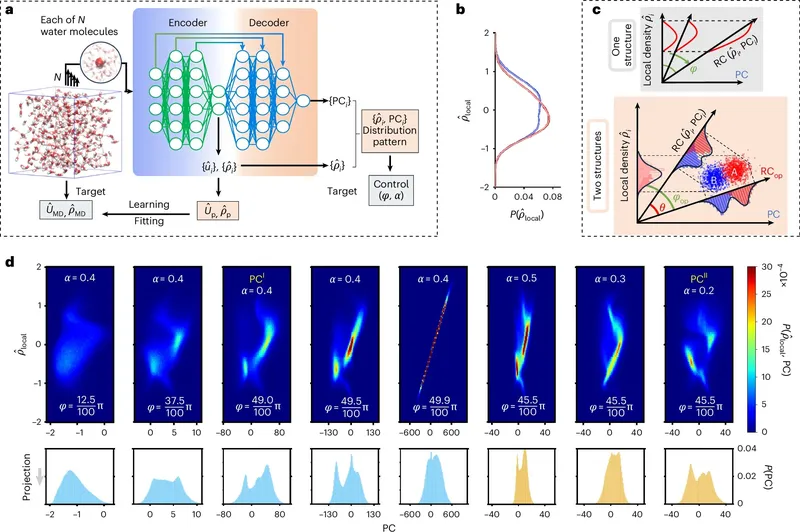
- A study published in Nature Physics provides molecular-level evidence that liquid water consists of two distinct microscopic structures: a denser, more disordered structure and a less dense, more ordered structure.
- The research utilized an unsupervised deep learning approach to extract hidden structural information from water molecule configurations, overcoming limitations of traditional methods.
- The findings support the "two-state model" of water, which explains its anomalous properties, including maximum density at 4°C and increased compressibility upon cooling.
- The study indicates that water undergoes a liquid-liquid phase transition (LLPT) in deeply supercooled conditions, splitting into high-density and low-density liquid phases.
Community Sentiment
Positives
- The researchers were careful not to bias their model, which is crucial for ensuring the validity of their findings in molecular dynamics simulations.
- The discovery of a phase transition in liquid water below 0°C adds a significant layer of understanding to water's unique properties, potentially impacting future research.
Concerns
- There are concerns that the chosen 4-site water model (TIP4P) may not be the most accurate, as other models like OPC have shown better results in previous studies.
- Skepticism surrounds the reliability of molecular dynamics results, as they may not accurately reflect experimental outcomes, raising questions about the validity of the findings.