Why your Amazon order confirmation emails have become so unhelpful
theverge.com
August 18, 2026
4 min read
47/100
Summary
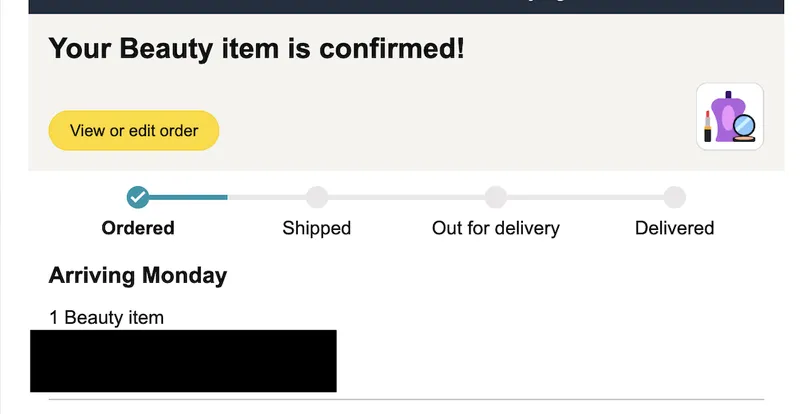
Amazon has simplified some order-related emails, replacing product names and thumbnails with broad categories such as “Beauty,” “Hardware,” or “Nutrition & Wellness.” Customers began reporting the change in July, while orders placed as recently as June still included the exact item names and images. The new emails use general category illustrations and require shoppers to open Amazon’s app or website to identify the specific products ordered. Customers have said the vague notifications make purchases harder to track and can resemble spam or phishing messages. Amazon spokesperson Maxine Tagay said the company simplified the emails because customers increasingly use phones and the Amazon app’s Your Orders page for consolidated, real-time order and delivery information. Tagay said limiting details in email also reduces customer information shared outside Amazon’s app and website. The change comes as Google and other technology companies develop AI shopping tools that can use email and other personal data to assist with purchases. Google has introduced AI-powered shopping features and said in May that it planned to integrate a cross-merchant shopping cart into Gmail. Amazon has pursued its own AI shopping features, including price tracking, automatic purchasing, and Alexa for Shopping, while seeking to preserve a direct relationship with shoppers.
Key Takeaways
- Amazon order emails have begun omitting exact product names and thumbnails in favor of general product categories.
- Amazon says the simplified emails direct customers to its app and website for current order details and reduce customer information shared outside its services.
- Complaints about the less detailed order notifications began appearing in July, and some customers say the emails make orders harder to identify.
- Google is building AI shopping tools that can use information from services including Gmail, while Amazon offers its own shopping features through its app and Alexa.
What the discussion said
The AI angle was mostly a flashpoint for a broader loss of control over commerce records, not a technical debate about Amazon’s email templates. Several readers suspect that purchase details are being removed from emails precisely because those messages are valuable machine-readable data: Gmail-scale collection could reveal shopping habits to a rival advertising and AI ecosystem, while third-party services can use receipts to pursue delivery or price claims. That theory sits alongside frustration that Amazon’s own order search has become a noisy, fuzzy retrieval tool that fails simple historical lookups. The thread did not establish that AI caused any particular change, and a few participants reported that product details and years of purchase history remained available for them. Still, the mood around AI-mediated optimization was sour. Readers see opaque search ranking, shifting delivery promises, and thinner records as examples of systems optimized for the platform rather than the customer. The constructive response was to move important purchase data outside the platform: request account exports, save receipts locally, or build user-controlled agents that retain the information a seller may later hide. One commenter broadly dismissed promises that AI would improve everyday technology, arguing that the visible result has often been worse usability and less trust.
Community Sentiment
Positives
- User-controlled agents that capture receipts and delivery details could preserve a buyer’s memory when platforms redesign records around their own incentives.
- Account data exports and locally saved receipts give customers a practical escape hatch from opaque, platform-managed purchase histories.
Concerns
- Amazon’s fuzzy order search is treated as an AI-style enhancement that turns a simple historical lookup into a flood of irrelevant matches, undermining a core customer record.
- Readers fear purchase-email redaction prevents outside tools from analyzing orders, concentrating valuable behavioral data with Amazon while reducing consumer recourse.
- The thread’s wider verdict on AI-driven optimization is bleak: promised convenience is perceived as producing less transparent tools and more adversarial customer relationships.