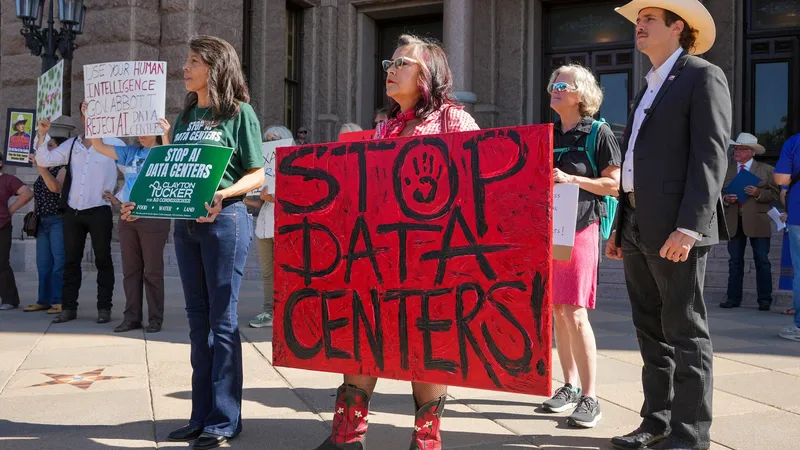
U.S. gov't moves to suppress pushback on data centers
The Environmental Protection Agency has proposed removing a federal requirement for states to publicize certain air-pollution permit applications and provide a 30-day public comment period. The change would cover permits for “minor sources” of pollution, a category that includes data centers, landfills, laundromats and steel mills. States could still seek public feedback or impose stricter standards, but they could also eliminate the comment period because it would no longer be federally required. The proposal could take effect within the next year. The change comes as communities challenge AI data-center projects over their environmental effects. Harvard School of Public Health researchers estimated that a Vantage data center in Loudoun County, Virginia, caused between $53 million and $99 million in annual health damages, the largest estimate for a single facility in the cited analysis. Research by Michael Cork informed public debate before Fluvanna County, Virginia, denied an expansion of a fossil-fuel plant. Attorneys general from 14 states and three cities opposed the proposal, saying that even sources classified as minor can have significant health and environmental effects. Their letter said removing application notices and the 30-day comment period would weaken transparency safeguards while accelerating data-center and AI-infrastructure construction. In Gilroy, California, Amazon began building a data center after a public-comment period that had ended two years earlier, while Festus, Missouri, residents sued their city over time allowed to review a proposed data center.
tomshardware.com
4 min
8/26/2026

US data centers tripled annual water consumption to 17B gallons
US data centers consumed an estimated 17 billion gallons of water in 2023, roughly three times the estimated total in 2014, according to a Congressional Research Service report published by the Library of Congress. The estimate includes water used directly for cooling and indirectly to generate the electricity powering facilities. More than 80% of the total water footprint came from electricity generation, while direct consumption accounted for a relatively small share of overall US water use. The federal government does not systematically track data-center water consumption, so the figure is an estimate assembled from incomplete state and local data rather than a facility-by-facility national accounting. Cooling choices shift demand between water and electricity. Evaporative systems generally use less energy but consume substantial water, while air-cooled systems reduce on-site water use while generally requiring more power. Municipal drinking-water systems supplied 97% of water used by US data centers in the CRS estimate, creating local competition for constrained supplies. The report says AI infrastructure is increasing electricity demand through denser specialized hardware, and consumption may have risen since its data ended in 2023. US water reporting remains fragmented because states and local utilities set requirements, and some municipal service agreements limit disclosure. Members of Congress have introduced bills on reporting and water reuse, though most remain at the introduction stage. European Union rules require data-center operators to report annual freshwater consumption.
forgeeks.net
6 min
8/25/2026
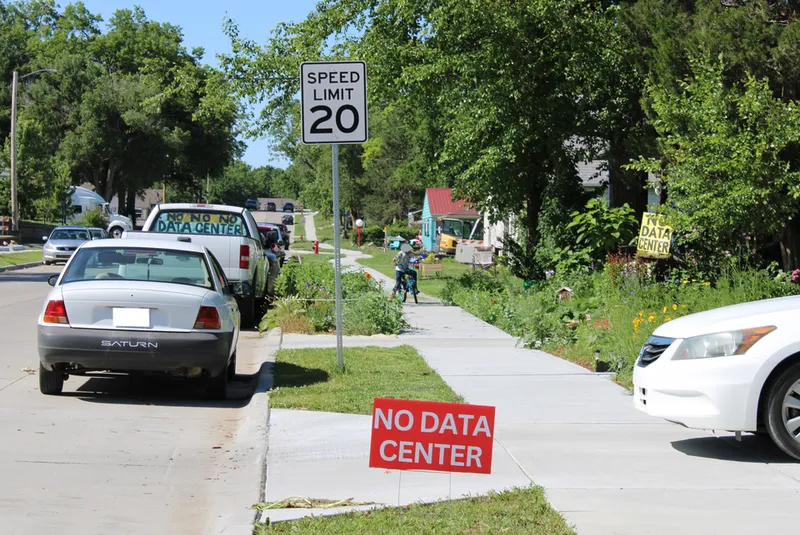
GOP urges top AI firms to do something about the toxic image of data centers
The National Republican Senatorial Committee has privately urged major AI companies to address growing public opposition to data centers, warning that the issue could affect Republican Sen. Jon Husted’s Ohio reelection campaign and future projects nationwide. A memo titled “Ohio Data Center Risk” calls on companies to explain who benefits from data centers, who pays for them and why communities should want them. Former Democratic Sen. Sherrod Brown is eight points ahead of Husted, according to the reported campaign polling, after spending millions to portray Husted as “the face of data centers in Ohio.” The NRSC said data centers are “the anchor hanging around Husted’s neck” and warned that a loss blamed on the facilities could deter politicians in other states from supporting new projects. Ohio has one of the largest shares of completed U.S. data-center projects, with dozens more planned. Reuters reported in 2026 that 77% of 4,531 poll respondents were concerned AI development could raise electricity bills; 64% opposed rapid AI data-center construction and 33% supported it. The United States has about 4,000 operating data centers and nearly 3,000 more in planning, while concerns have grown over their energy consumption and AI’s potential effects on jobs.
siliconangle.com
3 min
8/22/2026

Jason Kelce Encourages People To Mail Jars Of Pee To AI Data Centers In Bizarre New Ad—And We Don't Know What To Think
NFL player Jason Kelce appears in a Garage Beer and Liquid Death advertisement that satirically asks viewers to send urine to AI data centers to cool their facilities. Kelce says in the commercial that AI data centers “waste millions of gallons of water,” then sings with other performers, “We want your pee” and “Let’s pee on computers together.” The ad ends with performers walking to a post office as a voiceover tells viewers to drink Garage Beer or Liquid Death Sparkling Energy and send their urine to an AI data center of their choice. A disclaimer says viewers should not actually mail urine to data centers associated with Sam Altman or Elon Musk. The campaign uses the water demands of data centers as the basis for its joke and has drawn online attention as a signal of hostility toward the AI industry. The source text cites a Fox News poll reporting that 70% of respondents opposed data centers, while also claiming public opposition to data centers and surveillance technologies such as Flock cameras spans political affiliations. The source characterizes AI-related water use and expanding surveillance infrastructure as major drivers of public anger.
comicsands.com
3 min
8/20/2026

Field measurements of neighborhood-scale air temperature impacts of data centers
Vehicle-based temperature measurements around four operational data centers in metropolitan Phoenix found warmer air in residential areas downwind of the facilities. Traverses conducted from June 18 through October 25, 2025 measured maximum downwind warming of 2.2 °C and average downwind temperatures 0.7–0.9 °C above corresponding upwind areas. Thermal signatures were detected 100–500 m from facility perimeters. The sites included CyrusOne, Aligned, and Digital Realty facilities in Chandler and NTT PH1 in Mesa. At CyrusOne, a 169 MW colocation campus, average temperatures were 0.8 °C higher 500 m downwind on June 18 and 0.5 °C higher during a separate August traverse. Measurements at Aligned found 0.7 °C warming, Digital Realty recorded a 1.0 °C average difference and about 2 °C maximum difference, and NTT PH1 recorded a roughly 0.9 °C signal 300–500 m downwind. Air-cooled data centers convert nearly all IT electricity consumption into sensible heat. NTT PH1’s 36 MW IT load is estimated to draw about 47 MW total and reject heat comparable to roughly 40,000 households, while the 169 MW CyrusOne campus is comparable to more than 180,000 households. The researchers describe the observations as initial evidence from a limited sample and plan broader measurements and microscale modeling to assess mitigation options.
asmedigitalcollection.asme.org
14 min
8/18/2026
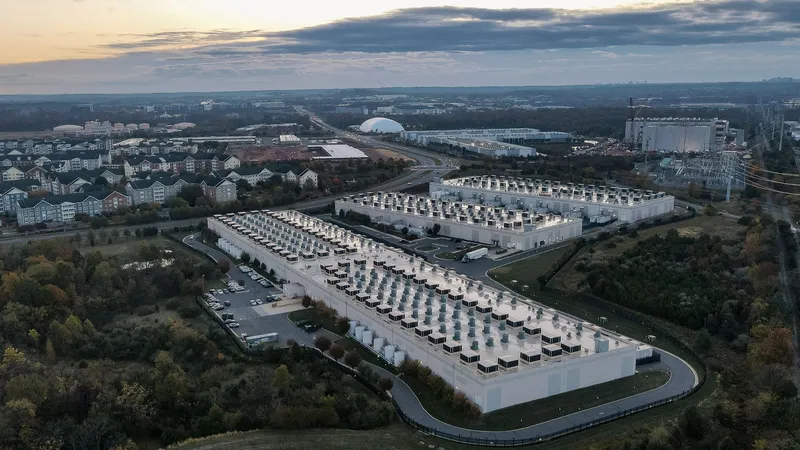
Amazon circumvents Gilroy community vote for AI data center
Amazon has begun construction on a massive AI data center in Gilroy, California, using a 45-year-old legal provision to bypass community voting. Local residents were not given an opportunity to comment on the project before its initiation.
tomshardware.com
5 min
8/9/2026
New Amazon Data Center Is Set to Have the Most Polluting Power Plant in the U.S.
Amazon is investing in a natural-gas-burning power plant in Texas, which could become the largest single source of climate pollution in the United States. This investment is part of a larger data center project, despite the company's commitments to climate initiatives.
nytimes.com
4 min
8/8/2026

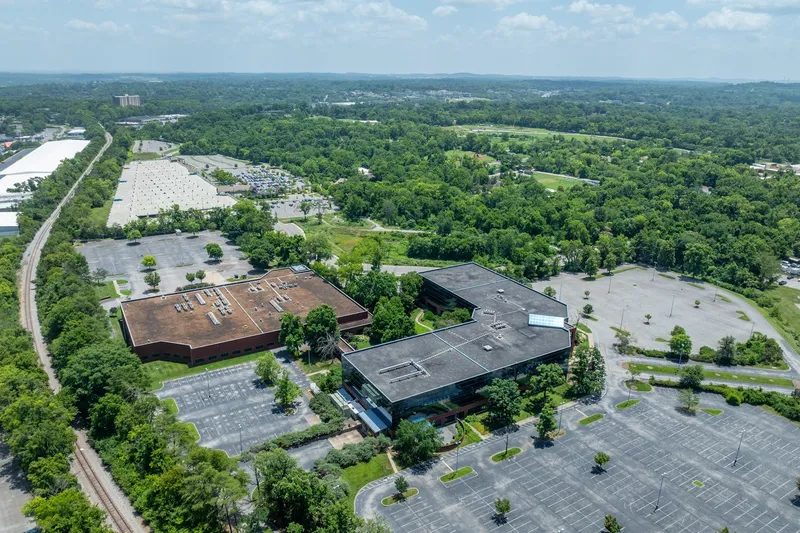
Nashville uses eminent domain to block data center near zoo
Nashville officials approved a 27-5 vote to use eminent domain to block a planned data center near the zoo. Mayor Freddie O’Connell stated that the government will proceed with the legal process to acquire the property for city use.
costar.com
2 min
8/6/2026
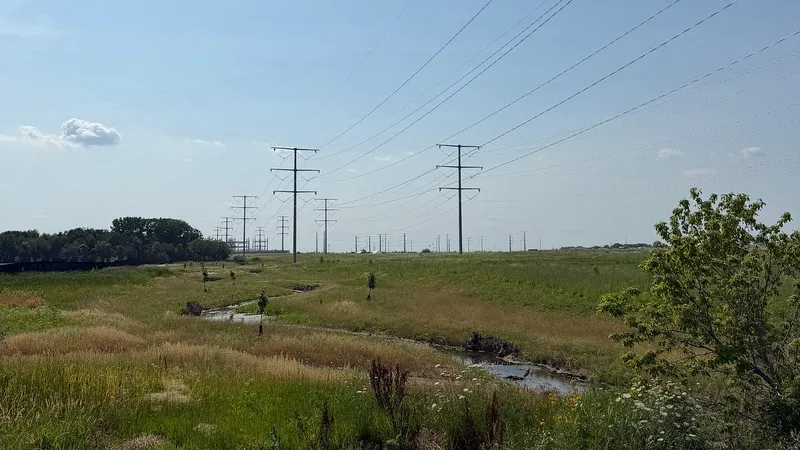
U.S. gov't moves to suppress pushback on data centers
The Environmental Protection Agency has proposed removing a federal requirement for states to publicize certain air-pollution permit applications and provide a 30-day public comment period. The change would cover permits for “minor sources” of pollution, a category that includes data centers, landfills, laundromats and steel mills. States could still seek public feedback or impose stricter standards, but they could also eliminate the comment period because it would no longer be federally required. The proposal could take effect within the next year. The change comes as communities challenge AI data-center projects over their environmental effects. Harvard School of Public Health researchers estimated that a Vantage data center in Loudoun County, Virginia, caused between $53 million and $99 million in annual health damages, the largest estimate for a single facility in the cited analysis. Research by Michael Cork informed public debate before Fluvanna County, Virginia, denied an expansion of a fossil-fuel plant. Attorneys general from 14 states and three cities opposed the proposal, saying that even sources classified as minor can have significant health and environmental effects. Their letter said removing application notices and the 30-day comment period would weaken transparency safeguards while accelerating data-center and AI-infrastructure construction. In Gilroy, California, Amazon began building a data center after a public-comment period that had ended two years earlier, while Festus, Missouri, residents sued their city over time allowed to review a proposed data center.
tomshardware.com
4 min
8/26/2026
GOP urges top AI firms to do something about the toxic image of data centers
The National Republican Senatorial Committee has privately urged major AI companies to address growing public opposition to data centers, warning that the issue could affect Republican Sen. Jon Husted’s Ohio reelection campaign and future projects nationwide. A memo titled “Ohio Data Center Risk” calls on companies to explain who benefits from data centers, who pays for them and why communities should want them. Former Democratic Sen. Sherrod Brown is eight points ahead of Husted, according to the reported campaign polling, after spending millions to portray Husted as “the face of data centers in Ohio.” The NRSC said data centers are “the anchor hanging around Husted’s neck” and warned that a loss blamed on the facilities could deter politicians in other states from supporting new projects. Ohio has one of the largest shares of completed U.S. data-center projects, with dozens more planned. Reuters reported in 2026 that 77% of 4,531 poll respondents were concerned AI development could raise electricity bills; 64% opposed rapid AI data-center construction and 33% supported it. The United States has about 4,000 operating data centers and nearly 3,000 more in planning, while concerns have grown over their energy consumption and AI’s potential effects on jobs.
siliconangle.com
3 min
8/22/2026
Field measurements of neighborhood-scale air temperature impacts of data centers
Vehicle-based temperature measurements around four operational data centers in metropolitan Phoenix found warmer air in residential areas downwind of the facilities. Traverses conducted from June 18 through October 25, 2025 measured maximum downwind warming of 2.2 °C and average downwind temperatures 0.7–0.9 °C above corresponding upwind areas. Thermal signatures were detected 100–500 m from facility perimeters. The sites included CyrusOne, Aligned, and Digital Realty facilities in Chandler and NTT PH1 in Mesa. At CyrusOne, a 169 MW colocation campus, average temperatures were 0.8 °C higher 500 m downwind on June 18 and 0.5 °C higher during a separate August traverse. Measurements at Aligned found 0.7 °C warming, Digital Realty recorded a 1.0 °C average difference and about 2 °C maximum difference, and NTT PH1 recorded a roughly 0.9 °C signal 300–500 m downwind. Air-cooled data centers convert nearly all IT electricity consumption into sensible heat. NTT PH1’s 36 MW IT load is estimated to draw about 47 MW total and reject heat comparable to roughly 40,000 households, while the 169 MW CyrusOne campus is comparable to more than 180,000 households. The researchers describe the observations as initial evidence from a limited sample and plan broader measurements and microscale modeling to assess mitigation options.
asmedigitalcollection.asme.org
14 min
8/18/2026
New Amazon Data Center Is Set to Have the Most Polluting Power Plant in the U.S.
Amazon is investing in a natural-gas-burning power plant in Texas, which could become the largest single source of climate pollution in the United States. This investment is part of a larger data center project, despite the company's commitments to climate initiatives.
nytimes.com
4 min
8/8/2026
Nashville uses eminent domain to block data center near zoo
Nashville officials approved a 27-5 vote to use eminent domain to block a planned data center near the zoo. Mayor Freddie O’Connell stated that the government will proceed with the legal process to acquire the property for city use.
costar.com
2 min
8/6/2026
US data centers tripled annual water consumption to 17B gallons
US data centers consumed an estimated 17 billion gallons of water in 2023, roughly three times the estimated total in 2014, according to a Congressional Research Service report published by the Library of Congress. The estimate includes water used directly for cooling and indirectly to generate the electricity powering facilities. More than 80% of the total water footprint came from electricity generation, while direct consumption accounted for a relatively small share of overall US water use. The federal government does not systematically track data-center water consumption, so the figure is an estimate assembled from incomplete state and local data rather than a facility-by-facility national accounting. Cooling choices shift demand between water and electricity. Evaporative systems generally use less energy but consume substantial water, while air-cooled systems reduce on-site water use while generally requiring more power. Municipal drinking-water systems supplied 97% of water used by US data centers in the CRS estimate, creating local competition for constrained supplies. The report says AI infrastructure is increasing electricity demand through denser specialized hardware, and consumption may have risen since its data ended in 2023. US water reporting remains fragmented because states and local utilities set requirements, and some municipal service agreements limit disclosure. Members of Congress have introduced bills on reporting and water reuse, though most remain at the introduction stage. European Union rules require data-center operators to report annual freshwater consumption.
forgeeks.net
6 min
8/25/2026
Jason Kelce Encourages People To Mail Jars Of Pee To AI Data Centers In Bizarre New Ad—And We Don't Know What To Think
NFL player Jason Kelce appears in a Garage Beer and Liquid Death advertisement that satirically asks viewers to send urine to AI data centers to cool their facilities. Kelce says in the commercial that AI data centers “waste millions of gallons of water,” then sings with other performers, “We want your pee” and “Let’s pee on computers together.” The ad ends with performers walking to a post office as a voiceover tells viewers to drink Garage Beer or Liquid Death Sparkling Energy and send their urine to an AI data center of their choice. A disclaimer says viewers should not actually mail urine to data centers associated with Sam Altman or Elon Musk. The campaign uses the water demands of data centers as the basis for its joke and has drawn online attention as a signal of hostility toward the AI industry. The source text cites a Fox News poll reporting that 70% of respondents opposed data centers, while also claiming public opposition to data centers and surveillance technologies such as Flock cameras spans political affiliations. The source characterizes AI-related water use and expanding surveillance infrastructure as major drivers of public anger.
comicsands.com
3 min
8/20/2026
Amazon circumvents Gilroy community vote for AI data center
Amazon has begun construction on a massive AI data center in Gilroy, California, using a 45-year-old legal provision to bypass community voting. Local residents were not given an opportunity to comment on the project before its initiation.
tomshardware.com
5 min
8/9/2026
xAI, SpaceX, and the Race for AI Buildout
xAI, controlled by SpaceX, plans to remove illegal gas turbines from its Memphis Colossus data center by July 2027. The company is operating outside of legal economic planning and restrictions.
illegal.solutions
9 min
8/6/2026
U.S. gov't moves to suppress pushback on data centers
The Environmental Protection Agency has proposed removing a federal requirement for states to publicize certain air-pollution permit applications and provide a 30-day public comment period. The change would cover permits for “minor sources” of pollution, a category that includes data centers, landfills, laundromats and steel mills. States could still seek public feedback or impose stricter standards, but they could also eliminate the comment period because it would no longer be federally required. The proposal could take effect within the next year. The change comes as communities challenge AI data-center projects over their environmental effects. Harvard School of Public Health researchers estimated that a Vantage data center in Loudoun County, Virginia, caused between $53 million and $99 million in annual health damages, the largest estimate for a single facility in the cited analysis. Research by Michael Cork informed public debate before Fluvanna County, Virginia, denied an expansion of a fossil-fuel plant. Attorneys general from 14 states and three cities opposed the proposal, saying that even sources classified as minor can have significant health and environmental effects. Their letter said removing application notices and the 30-day comment period would weaken transparency safeguards while accelerating data-center and AI-infrastructure construction. In Gilroy, California, Amazon began building a data center after a public-comment period that had ended two years earlier, while Festus, Missouri, residents sued their city over time allowed to review a proposed data center.
tomshardware.com
4 min
8/26/2026
Jason Kelce Encourages People To Mail Jars Of Pee To AI Data Centers In Bizarre New Ad—And We Don't Know What To Think
NFL player Jason Kelce appears in a Garage Beer and Liquid Death advertisement that satirically asks viewers to send urine to AI data centers to cool their facilities. Kelce says in the commercial that AI data centers “waste millions of gallons of water,” then sings with other performers, “We want your pee” and “Let’s pee on computers together.” The ad ends with performers walking to a post office as a voiceover tells viewers to drink Garage Beer or Liquid Death Sparkling Energy and send their urine to an AI data center of their choice. A disclaimer says viewers should not actually mail urine to data centers associated with Sam Altman or Elon Musk. The campaign uses the water demands of data centers as the basis for its joke and has drawn online attention as a signal of hostility toward the AI industry. The source text cites a Fox News poll reporting that 70% of respondents opposed data centers, while also claiming public opposition to data centers and surveillance technologies such as Flock cameras spans political affiliations. The source characterizes AI-related water use and expanding surveillance infrastructure as major drivers of public anger.
comicsands.com
3 min
8/20/2026
New Amazon Data Center Is Set to Have the Most Polluting Power Plant in the U.S.
Amazon is investing in a natural-gas-burning power plant in Texas, which could become the largest single source of climate pollution in the United States. This investment is part of a larger data center project, despite the company's commitments to climate initiatives.
nytimes.com
4 min
8/8/2026
US data centers tripled annual water consumption to 17B gallons
US data centers consumed an estimated 17 billion gallons of water in 2023, roughly three times the estimated total in 2014, according to a Congressional Research Service report published by the Library of Congress. The estimate includes water used directly for cooling and indirectly to generate the electricity powering facilities. More than 80% of the total water footprint came from electricity generation, while direct consumption accounted for a relatively small share of overall US water use. The federal government does not systematically track data-center water consumption, so the figure is an estimate assembled from incomplete state and local data rather than a facility-by-facility national accounting. Cooling choices shift demand between water and electricity. Evaporative systems generally use less energy but consume substantial water, while air-cooled systems reduce on-site water use while generally requiring more power. Municipal drinking-water systems supplied 97% of water used by US data centers in the CRS estimate, creating local competition for constrained supplies. The report says AI infrastructure is increasing electricity demand through denser specialized hardware, and consumption may have risen since its data ended in 2023. US water reporting remains fragmented because states and local utilities set requirements, and some municipal service agreements limit disclosure. Members of Congress have introduced bills on reporting and water reuse, though most remain at the introduction stage. European Union rules require data-center operators to report annual freshwater consumption.
forgeeks.net
6 min
8/25/2026
Field measurements of neighborhood-scale air temperature impacts of data centers
Vehicle-based temperature measurements around four operational data centers in metropolitan Phoenix found warmer air in residential areas downwind of the facilities. Traverses conducted from June 18 through October 25, 2025 measured maximum downwind warming of 2.2 °C and average downwind temperatures 0.7–0.9 °C above corresponding upwind areas. Thermal signatures were detected 100–500 m from facility perimeters. The sites included CyrusOne, Aligned, and Digital Realty facilities in Chandler and NTT PH1 in Mesa. At CyrusOne, a 169 MW colocation campus, average temperatures were 0.8 °C higher 500 m downwind on June 18 and 0.5 °C higher during a separate August traverse. Measurements at Aligned found 0.7 °C warming, Digital Realty recorded a 1.0 °C average difference and about 2 °C maximum difference, and NTT PH1 recorded a roughly 0.9 °C signal 300–500 m downwind. Air-cooled data centers convert nearly all IT electricity consumption into sensible heat. NTT PH1’s 36 MW IT load is estimated to draw about 47 MW total and reject heat comparable to roughly 40,000 households, while the 169 MW CyrusOne campus is comparable to more than 180,000 households. The researchers describe the observations as initial evidence from a limited sample and plan broader measurements and microscale modeling to assess mitigation options.
asmedigitalcollection.asme.org
14 min
8/18/2026
GOP urges top AI firms to do something about the toxic image of data centers
The National Republican Senatorial Committee has privately urged major AI companies to address growing public opposition to data centers, warning that the issue could affect Republican Sen. Jon Husted’s Ohio reelection campaign and future projects nationwide. A memo titled “Ohio Data Center Risk” calls on companies to explain who benefits from data centers, who pays for them and why communities should want them. Former Democratic Sen. Sherrod Brown is eight points ahead of Husted, according to the reported campaign polling, after spending millions to portray Husted as “the face of data centers in Ohio.” The NRSC said data centers are “the anchor hanging around Husted’s neck” and warned that a loss blamed on the facilities could deter politicians in other states from supporting new projects. Ohio has one of the largest shares of completed U.S. data-center projects, with dozens more planned. Reuters reported in 2026 that 77% of 4,531 poll respondents were concerned AI development could raise electricity bills; 64% opposed rapid AI data-center construction and 33% supported it. The United States has about 4,000 operating data centers and nearly 3,000 more in planning, while concerns have grown over their energy consumption and AI’s potential effects on jobs.
siliconangle.com
3 min
8/22/2026
Amazon circumvents Gilroy community vote for AI data center
Amazon has begun construction on a massive AI data center in Gilroy, California, using a 45-year-old legal provision to bypass community voting. Local residents were not given an opportunity to comment on the project before its initiation.
tomshardware.com
5 min
8/9/2026
Nashville uses eminent domain to block data center near zoo
Nashville officials approved a 27-5 vote to use eminent domain to block a planned data center near the zoo. Mayor Freddie O’Connell stated that the government will proceed with the legal process to acquire the property for city use.
costar.com
2 min
8/6/2026