What Is a Syslog Server?
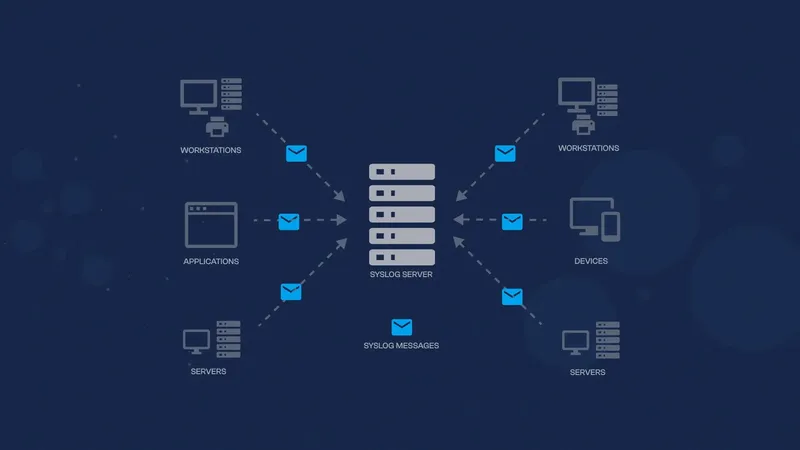
A syslog server is software or a dedicated appliance that centrally receives, stores, and indexes event messages from network-connected devices, operating systems, applications, and security systems. Logged events can include startup and shutdown activity, login attempts, firewall denials, VPN connections, configuration changes, application errors, and hardware failures. Devices typically transmit formatted syslog messages using UDP port 514, TCP port 514, or encrypted TLS transport. The server can receive messages from hundreds or thousands of devices, organize them by source, timestamp, severity, facility, and event type, and retain or archive older data. Its components commonly include a receiver, parser, storage engine, search capability, alerting module, and reporting dashboard. Syslog defines eight severity levels, ranging from Emergency (0) to Debug (7), while facilities such as kernel, authentication, daemon, and Local0–Local7 categorize message sources. Centralized logging supports troubleshooting, security monitoring, incident investigation, compliance auditing, and long-term capacity analysis. Organizations can configure alerts for repeated failed logins, firewall attacks, crashes, and resource-utilization events. TLS, synchronized NTP time, access controls, retention policies, storage monitoring, and backups help protect log data. Compared with a SIEM, a syslog server generally provides lower-cost collection and search but more limited correlation, threat detection, reporting, and machine-learning capabilities.
blog.greencloudvps.com
6 min
14h ago
What Is a Syslog Server?
A syslog server is software or a dedicated appliance that centrally receives, stores, and indexes event messages from network-connected devices, operating systems, applications, and security systems. Logged events can include startup and shutdown activity, login attempts, firewall denials, VPN connections, configuration changes, application errors, and hardware failures. Devices typically transmit formatted syslog messages using UDP port 514, TCP port 514, or encrypted TLS transport. The server can receive messages from hundreds or thousands of devices, organize them by source, timestamp, severity, facility, and event type, and retain or archive older data. Its components commonly include a receiver, parser, storage engine, search capability, alerting module, and reporting dashboard. Syslog defines eight severity levels, ranging from Emergency (0) to Debug (7), while facilities such as kernel, authentication, daemon, and Local0–Local7 categorize message sources. Centralized logging supports troubleshooting, security monitoring, incident investigation, compliance auditing, and long-term capacity analysis. Organizations can configure alerts for repeated failed logins, firewall attacks, crashes, and resource-utilization events. TLS, synchronized NTP time, access controls, retention policies, storage monitoring, and backups help protect log data. Compared with a SIEM, a syslog server generally provides lower-cost collection and search but more limited correlation, threat detection, reporting, and machine-learning capabilities.
blog.greencloudvps.com
6 min
14h ago
What Is a Syslog Server?
A syslog server is software or a dedicated appliance that centrally receives, stores, and indexes event messages from network-connected devices, operating systems, applications, and security systems. Logged events can include startup and shutdown activity, login attempts, firewall denials, VPN connections, configuration changes, application errors, and hardware failures. Devices typically transmit formatted syslog messages using UDP port 514, TCP port 514, or encrypted TLS transport. The server can receive messages from hundreds or thousands of devices, organize them by source, timestamp, severity, facility, and event type, and retain or archive older data. Its components commonly include a receiver, parser, storage engine, search capability, alerting module, and reporting dashboard. Syslog defines eight severity levels, ranging from Emergency (0) to Debug (7), while facilities such as kernel, authentication, daemon, and Local0–Local7 categorize message sources. Centralized logging supports troubleshooting, security monitoring, incident investigation, compliance auditing, and long-term capacity analysis. Organizations can configure alerts for repeated failed logins, firewall attacks, crashes, and resource-utilization events. TLS, synchronized NTP time, access controls, retention policies, storage monitoring, and backups help protect log data. Compared with a SIEM, a syslog server generally provides lower-cost collection and search but more limited correlation, threat detection, reporting, and machine-learning capabilities.
blog.greencloudvps.com
6 min
14h ago
No more articles to load