Tooltips need a delay, and then they need to skip it
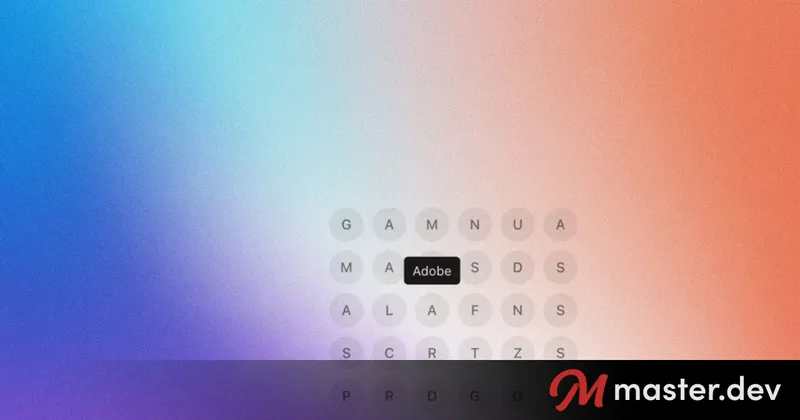
FrontPrep changed its company-logo tooltips to avoid opening during incidental cursor movement while keeping navigation among adjacent logos responsive. A logo tooltip now waits 200ms before opening, so cursors that pass across a trigger quickly do not display it. Leaving an open tooltip closes it immediately and starts a 300ms “warm” window. During that 300ms window, hovering another logo opens its tooltip instantly and skips the entrance animation. Each newly opened tooltip cancels the prior cooldown, keeping the page warm while users move between nearby triggers. When the cooldown expires, the page returns to a cold state and the next tooltip again requires the 200ms hover delay. The implementation shares warm-state data through a React provider, stores it in refs to avoid re-rendering every tooltip, and clears pending open timers when the cursor leaves before a tooltip opens. The implementation uses Radix and Motion in FrontPrep, with a simpler React example showing the timing logic. The author recommends 200ms as a balance: delays below 150ms can allow unintended cursor passes to open tooltips, while delays above 250ms can feel slow. A Claude skill is provided to audit tooltip timing across codebases, specifying a 200ms opening delay, 300ms warm window, and zero close delay.
blog.master.dev
8 min
8/25/2026

Web Components: The Framework-Free Renaissance
Modern browsers support web components, allowing developers to build sophisticated, reactive web interfaces without relying on frameworks like React, Vue, or Angular. This technology enables the creation of modular, reusable UI elements through custom elements, shadow DOM, and native event systems.
caimito.net
7 min
2/20/2026
Tooltips need a delay, and then they need to skip it
FrontPrep changed its company-logo tooltips to avoid opening during incidental cursor movement while keeping navigation among adjacent logos responsive. A logo tooltip now waits 200ms before opening, so cursors that pass across a trigger quickly do not display it. Leaving an open tooltip closes it immediately and starts a 300ms “warm” window. During that 300ms window, hovering another logo opens its tooltip instantly and skips the entrance animation. Each newly opened tooltip cancels the prior cooldown, keeping the page warm while users move between nearby triggers. When the cooldown expires, the page returns to a cold state and the next tooltip again requires the 200ms hover delay. The implementation shares warm-state data through a React provider, stores it in refs to avoid re-rendering every tooltip, and clears pending open timers when the cursor leaves before a tooltip opens. The implementation uses Radix and Motion in FrontPrep, with a simpler React example showing the timing logic. The author recommends 200ms as a balance: delays below 150ms can allow unintended cursor passes to open tooltips, while delays above 250ms can feel slow. A Claude skill is provided to audit tooltip timing across codebases, specifying a 200ms opening delay, 300ms warm window, and zero close delay.
blog.master.dev
8 min
8/25/2026
Web Components: The Framework-Free Renaissance
Modern browsers support web components, allowing developers to build sophisticated, reactive web interfaces without relying on frameworks like React, Vue, or Angular. This technology enables the creation of modular, reusable UI elements through custom elements, shadow DOM, and native event systems.
caimito.net
7 min
2/20/2026
Tooltips need a delay, and then they need to skip it
FrontPrep changed its company-logo tooltips to avoid opening during incidental cursor movement while keeping navigation among adjacent logos responsive. A logo tooltip now waits 200ms before opening, so cursors that pass across a trigger quickly do not display it. Leaving an open tooltip closes it immediately and starts a 300ms “warm” window. During that 300ms window, hovering another logo opens its tooltip instantly and skips the entrance animation. Each newly opened tooltip cancels the prior cooldown, keeping the page warm while users move between nearby triggers. When the cooldown expires, the page returns to a cold state and the next tooltip again requires the 200ms hover delay. The implementation shares warm-state data through a React provider, stores it in refs to avoid re-rendering every tooltip, and clears pending open timers when the cursor leaves before a tooltip opens. The implementation uses Radix and Motion in FrontPrep, with a simpler React example showing the timing logic. The author recommends 200ms as a balance: delays below 150ms can allow unintended cursor passes to open tooltips, while delays above 250ms can feel slow. A Claude skill is provided to audit tooltip timing across codebases, specifying a 200ms opening delay, 300ms warm window, and zero close delay.
blog.master.dev
8 min
8/25/2026
Web Components: The Framework-Free Renaissance
Modern browsers support web components, allowing developers to build sophisticated, reactive web interfaces without relying on frameworks like React, Vue, or Angular. This technology enables the creation of modular, reusable UI elements through custom elements, shadow DOM, and native event systems.
caimito.net
7 min
2/20/2026
No more articles to load