AI didn't erase the junior engineer's value, it increased it it
franciscotrindade.me
August 20, 2026
4 min read
49/100
Summary
The author argues that AI has increased, rather than erased, the value junior engineers can provide by expanding the complexity they can manage. In one example, an intern led delivery of a long-requested product feature that had not cleared prioritization thresholds: the intern gathered requirements from a product manager, wrote and aligned a design document, adapted to technical and product trade-offs, and built the feature with AI and team support. AI generated much of the code, while the intern owned the decisions. The author contends that engineering work extends beyond implementing specifications or prompting AI tools. Engineers at different levels solve customer problems while managing different amounts of technical complexity, including requirements, customer context, and trade-offs that may depend on information beyond a codebase. The author says junior engineers therefore add organizational capacity, while AI can reduce parts of early-career training previously spent learning languages, tools, patterns, and codebase details. Human-provided organizational context remains necessary, according to the author. The author also argues that engineers who began their careers using AI may be well positioned as they gain experience, and that organizations need to keep developing future technical judgment by hiring and training early-career engineers.
Key Takeaways
- The author says an intern led a long-requested feature from requirements and design through delivery, using AI for much of the code while retaining responsibility for decisions.
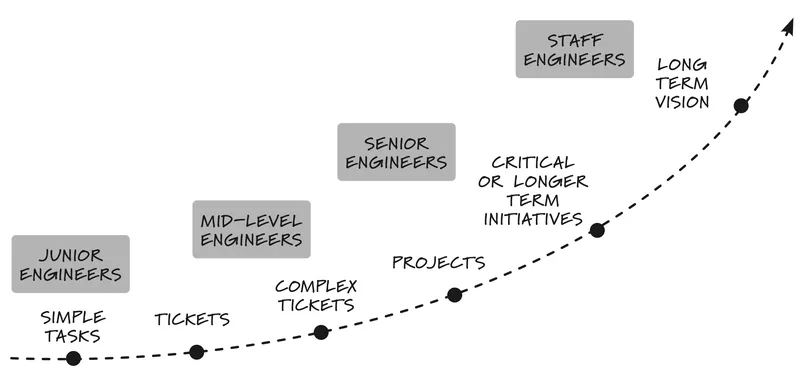
- The author argues that junior engineers contribute by managing limited technical and product complexity, not merely by implementing tasks specified by senior engineers.
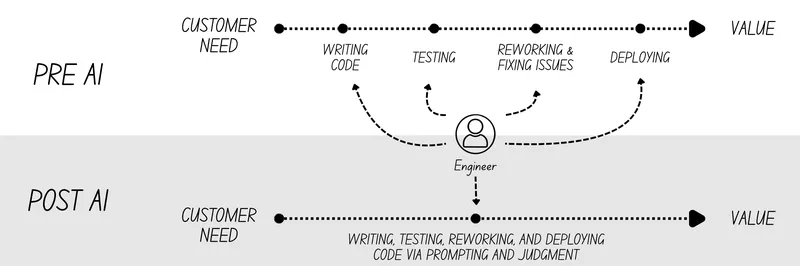
- AI can reduce portions of early-career software training, but human context about a company's codebase, architecture, and priorities remains important, according to the author.
- The author argues that organizations need to develop future technical judgment by continuing to hire and train junior engineers.
What the discussion said
The thread barely accepts the headline at face value. Commenters mostly argued that AI has not made junior engineers more valuable by default; it has made the old ticket-taking version of junior work easier to automate, while raising the premium on system judgment, product understanding, design sense, and ownership. Several people described a workflow in which a senior can simply hand review feedback to an agent, eliminating the supposed learning loop of junior-to-senior review-to-junior revision. Others pushed back that rewriting someone else’s change with an agent destroys ownership and loses the reasoning behind design choices. The strongest anxiety is developmental: juniors who lean on models without fundamentals can ship lots of plausible code, remain unable to diagnose failures, and avoid the productive struggle and senior interaction that once exposed gaps. That burden then returns as bloated AI-generated pull requests for seniors to review. Still, a minority sees AI as a genuine lever: an intern can now investigate requirements, draft a design, and deliver a previously neglected feature with team guidance, solving customer problems that would once have been deferred. Readers also noted that skilled AI use is not trivial, but doubted that prompt-fashion alone creates durable advantage. The unresolved question is whether organizations will deliberately preserve a path for novices to acquire real engineering judgment as models improve.
Where opinion split
The central dispute is whether AI expands junior engineers' useful scope or erases the economic reason to hire them. Optimists argue that guided juniors can own customer-facing work that was previously beyond them, making dormant backlog items viable. Skeptics argue that generated code substitutes for the low-skill work juniors used to do while blocking the hard learning needed to become the senior reviewers and architects industry still depends on.
Community Sentiment
Positives
- AI can let an intern take a neglected customer request from requirements through design and delivery, turning work once too risky for a novice into shipped value.
- Strong developers can use agents to compress repetitive implementation and iteration, freeing human attention for architecture, system constraints, and product tradeoffs.
- Effective AI-assisted development appears to require real operational skill, from steering models productively to coordinating agent loops rather than merely typing prompts.
Concerns
- Juniors who cannot solve problems beyond an AI chat can spend weeks cycling through failed outputs, because the model masks the moment when they should ask a senior for help.
- Fast code generation rewards volume before judgment: AI-heavy contributors reportedly repeat design mistakes and improve so slowly that their output creates more downstream work.
- Agent-generated pull requests can turn review into a burnout machine, replacing a manageable change with far more ungrounded code for seniors to validate.
- If models automate cleanup, documentation, tests, and routine tickets, smaller teams may freeze junior hiring and starve the pipeline that produces future technical leaders.
Related Articles
Not hiring junior engineers won't solve the problem you think you have
Aug 5, 2026

If you stop hiring juniors, your senior engineers own you
Apr 26, 2026

AI should elevate your thinking, not replace it
Apr 26, 2026
The AI Productivity Gap
Aug 3, 2026

AI Made Writing Code Easier. It Made Being an Engineer Harder
Mar 1, 2026