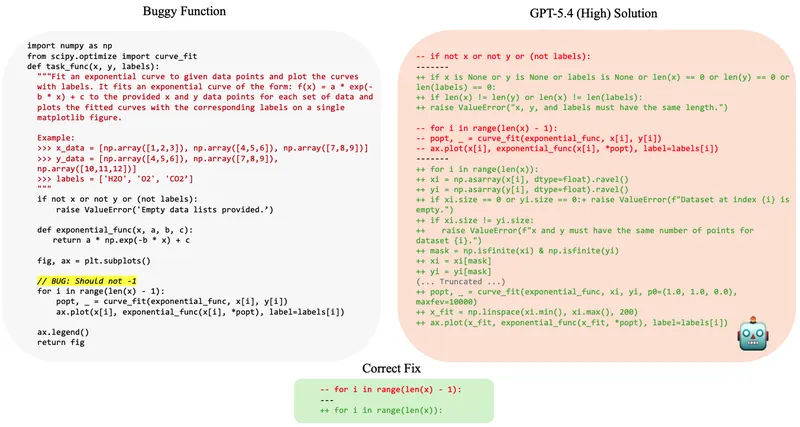
Over-editing refers to a model modifying code beyond what is necessary
nrehiew.github.io
April 22, 2026
16 min read
🔥🔥🔥🔥🔥
66/100
Summary
AI-assisted coding tools such as Cursor, GitHub Copilot, Claude Code, and Codex are increasingly being used to modify code. These models often address simple bugs but may inadvertently introduce additional changes that complicate the code further.
Key Takeaways
- AI coding models often exhibit an "Over-Editing" problem, where they modify code beyond what is necessary to fix a specific issue, resulting in significant structural changes.
- Over-editing complicates code reviews, as reviewers must navigate extensive changes that make the original code unrecognizable, even if the output is functionally correct.
- The tendency for over-editing is particularly problematic in brown-field development, where understanding and maintaining existing code is crucial.
- A new dataset was created to study over-editing by programmatically corrupting code samples, allowing for a precise evaluation of how much additional code was altered during bug fixes.
Coverage & discussions
Hacker News · nrehiew.github.io
Community discussions
Community Sentiment
Positives
- Claude Code has exceeded expectations, demonstrating the ability to learn from mistakes and improve its performance over time, which enhances developer productivity.
- The ability of AI to handle boilerplate code significantly reduces the time developers spend on repetitive tasks, allowing them to focus on more complex problems.
- Many users report that AI tools can effectively assist in code generation, leading to a shift in roles where developers spend more time on architecture and oversight rather than coding.
- The rapid advancements in coding models over the past months highlight the potential for continuous improvement in AI capabilities, suggesting a promising future for AI-assisted development.
Concerns
- Over-editing by AI agents often leads to unintended consequences, such as breaking existing functionality or introducing bugs, raising concerns about reliability.
- Users express anxiety over the lack of understanding regarding what AI agents are doing, particularly when they modify code without clear justification, leading to potential data loss.
- There are notable frustrations with AI's tendency to make unnecessary changes, which can complicate codebases instead of improving them, indicating a need for better calibration to project contexts.
- The inconsistency in AI performance, where some users find it deeply flawed while others see it as effective, raises questions about the reliability and generalizability of AI tools.