We hid backdoors in ~40MB binaries and asked AI + Ghidra to find them
quesma.com
February 22, 2026
14 min read
🔥🔥🔥🔥🔥
60/100
Summary
Backdoors were hidden in ~40MB binaries to test AI and Ghidra's capabilities in malware detection. The experiment involved collaboration with Michał “Redford” Kowalczyk, a reverse engineering expert, to establish a benchmark for identifying malicious code in binaries.
Key Takeaways
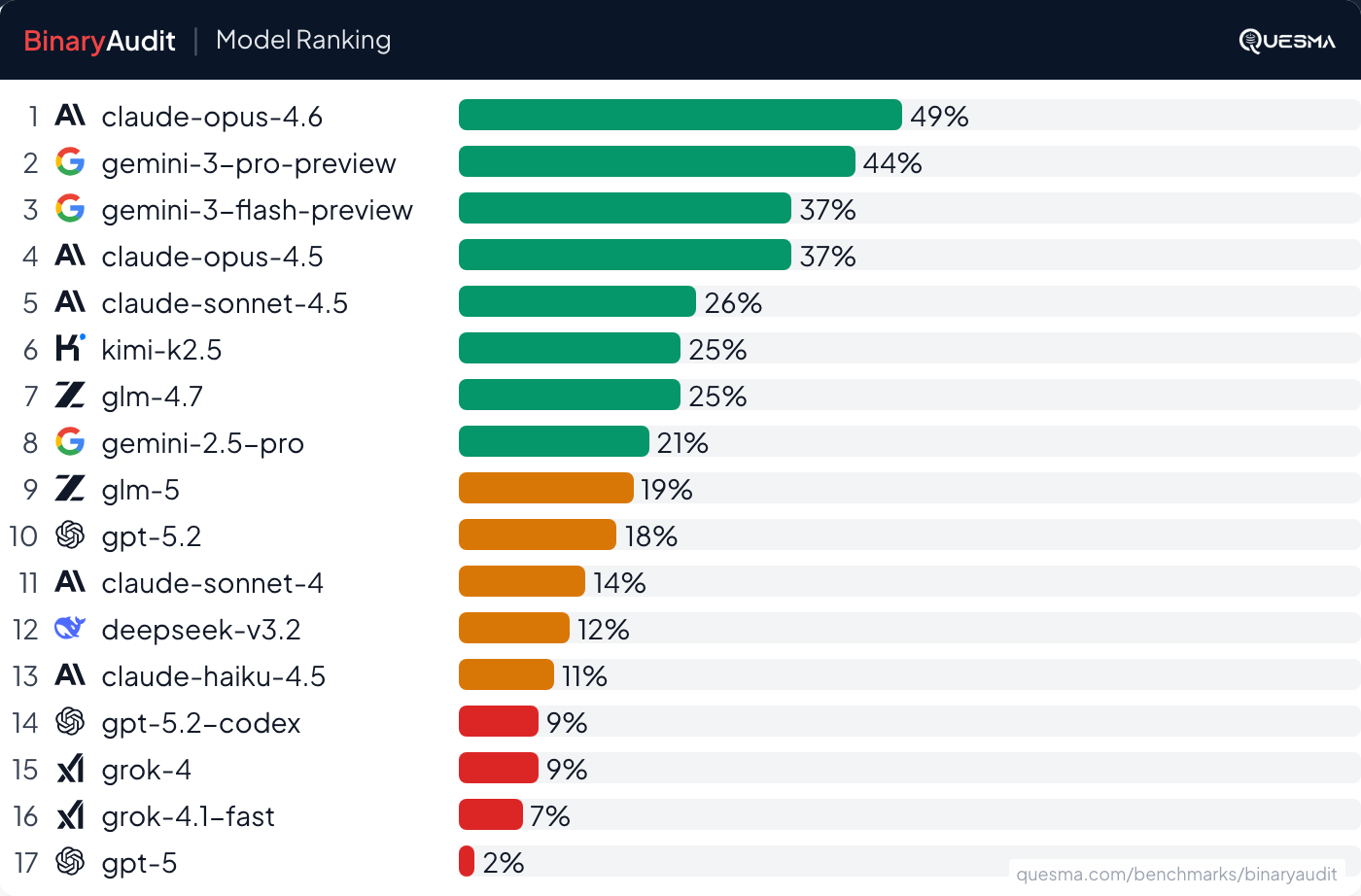
- AI agents, including Claude Opus 4.6, can detect hidden backdoors in binary executables, achieving a 49% success rate on small to mid-sized binaries.
- Most AI models used for malware detection exhibit a high false positive rate, incorrectly flagging clean binaries as malicious.
- The analysis of binary executables is complex due to the loss of original code structure during compilation, making reverse engineering a challenging task.
- Recent supply chain attacks highlight the vulnerabilities in digital devices and firmware, underscoring the need for effective malware detection methods.
Community Sentiment
Positives
- Ghidra proves to be an effective tool for reverse engineering, enabling tasks that were previously daunting without LLM assistance, showcasing its potential in file format analysis.
- The latest AI models show promise in reverse engineering tasks, indicating a shift towards more capable tools for legacy binary analysis and internal audits.
- The ability of Claude Opus 4.6 to detect 46% of backdoors, despite a higher false positive rate, highlights the advancements in AI detection capabilities.
Concerns
- The claim that AI can replicate skilled reverse engineering work on unobfuscated binaries is limited, as it does not account for the complexities introduced by obfuscation.
- Relying on AI for security audits is questionable, as current models may not yet meet the rigorous demands of identifying sophisticated threats effectively.
- The low detection rates of models like GPT, despite a 0% false positive rate, suggest that while they are precise, their overall effectiveness in identifying backdoors remains inadequate.
Related Articles

We reproduced Anthropic's Mythos findings with public models
Apr 17, 2026

Evaluating and mitigating the growing risk of LLM-discovered 0-days
Feb 5, 2026
Will It Mythos?
Jun 23, 2026

Discovering Cryptographic Weaknesses with Claude
Jul 28, 2026

Patterns and problems in emerging multi-agent systems
Aug 16, 2026