Bun 1.4 Rust rewrite is not looking good
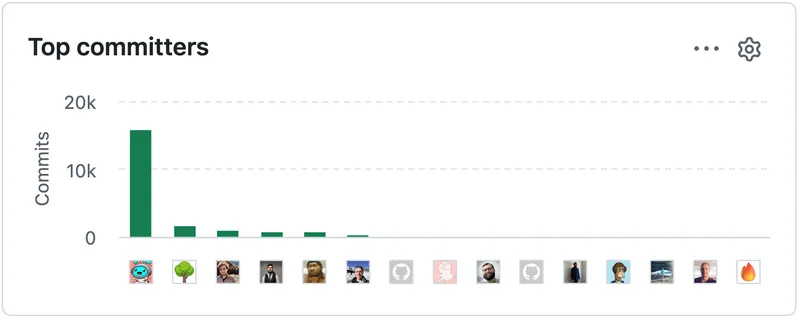
Bun’s planned 1.4 release, which includes a rewrite from Zig to Rust, remained unreleased three months after the prior stable version, its longest release gap since Bun launched in 2022. Public posts from Bun creator Jarred Sumner set and then missed several expected release dates, including July 7, a Tuesday, Monday, and “tomorrow.” Sumner said on August 15 that Bun 1.4 was compiling and on August 17 that it was delayed until Monday. The rewrite has generated substantial AI-assisted development activity. Over the preceding month, the source text reports 15,800 commits from robobun, 1,600 from autofix-ci[bot], and 790 from Sumner. Bun also had more than 5,000 open pull requests, compared with 2,200 for OpenClaw and 441 for React; GitHub recommends keeping fewer than 1,000 open pull requests against a single branch to avoid mergeability-check timeouts. The source text characterizes Bun 1.4 as a test of AI agents maintaining a production codebase under human direction. Zig creator Andrew Kelley said he and others were “increasingly horrified” by programming practices in Bun’s codebase, citing hacks, assertions, and code quality concerns. The source text argues that numerous Rust unsafe blocks call into question whether the rewrite achieved its stated memory-safety rationale, while framing the project as a prominent demonstration of Anthropic’s Claude coding capabilities.
tipiirai.com
4 min
8/19/2026
Bun 1.4 Rust rewrite is not looking good
Bun’s planned 1.4 release, which includes a rewrite from Zig to Rust, remained unreleased three months after the prior stable version, its longest release gap since Bun launched in 2022. Public posts from Bun creator Jarred Sumner set and then missed several expected release dates, including July 7, a Tuesday, Monday, and “tomorrow.” Sumner said on August 15 that Bun 1.4 was compiling and on August 17 that it was delayed until Monday. The rewrite has generated substantial AI-assisted development activity. Over the preceding month, the source text reports 15,800 commits from robobun, 1,600 from autofix-ci[bot], and 790 from Sumner. Bun also had more than 5,000 open pull requests, compared with 2,200 for OpenClaw and 441 for React; GitHub recommends keeping fewer than 1,000 open pull requests against a single branch to avoid mergeability-check timeouts. The source text characterizes Bun 1.4 as a test of AI agents maintaining a production codebase under human direction. Zig creator Andrew Kelley said he and others were “increasingly horrified” by programming practices in Bun’s codebase, citing hacks, assertions, and code quality concerns. The source text argues that numerous Rust unsafe blocks call into question whether the rewrite achieved its stated memory-safety rationale, while framing the project as a prominent demonstration of Anthropic’s Claude coding capabilities.
tipiirai.com
4 min
8/19/2026
Bun 1.4 Rust rewrite is not looking good
Bun’s planned 1.4 release, which includes a rewrite from Zig to Rust, remained unreleased three months after the prior stable version, its longest release gap since Bun launched in 2022. Public posts from Bun creator Jarred Sumner set and then missed several expected release dates, including July 7, a Tuesday, Monday, and “tomorrow.” Sumner said on August 15 that Bun 1.4 was compiling and on August 17 that it was delayed until Monday. The rewrite has generated substantial AI-assisted development activity. Over the preceding month, the source text reports 15,800 commits from robobun, 1,600 from autofix-ci[bot], and 790 from Sumner. Bun also had more than 5,000 open pull requests, compared with 2,200 for OpenClaw and 441 for React; GitHub recommends keeping fewer than 1,000 open pull requests against a single branch to avoid mergeability-check timeouts. The source text characterizes Bun 1.4 as a test of AI agents maintaining a production codebase under human direction. Zig creator Andrew Kelley said he and others were “increasingly horrified” by programming practices in Bun’s codebase, citing hacks, assertions, and code quality concerns. The source text argues that numerous Rust unsafe blocks call into question whether the rewrite achieved its stated memory-safety rationale, while framing the project as a prominent demonstration of Anthropic’s Claude coding capabilities.
tipiirai.com
4 min
8/19/2026
No more articles to load