:quality(85)/https://andros.dev/media/thumbnails/franco-antonio-giovanella-Lzys6r1xFD8-unsplash.jpg)
Finger: Social network that never died
Finger is a network protocol created at Stanford’s Artificial Intelligence Laboratory in 1971 to show who was using a shared WAITS time-sharing computer, including names, locations and terminal idle time. Ken Harrenstien formalized it in RFC 742 in 1977, and RFC 1288 became its definitive specification in 1991. A Finger client connects to a server’s TCP port 79, sends a username or an empty query, receives plain text, and closes the connection. Finger servers commonly returned users’ .plan and .project text files, originally intended to describe current work and plans. Users turned .plan files into public diaries, technical logs, jokes and other personal publishing. John Carmack used a .plan file from 1996 to 2010 as a development journal and announced plans to release Doom’s source code there on August 18, 1997. Carnegie Mellon students also exposed a Coca-Cola machine’s stock and bottle-cooling data through Finger around 1982. Security and privacy concerns drove Finger’s decline, particularly after the 1988 Morris worm exploited a fingerd buffer overflow. Some systems still include Finger clients, including Windows’ finger.exe, which attackers abused in 2020 to retrieve malware payloads. Current services and software, including Happy Net Box, Finger.Farm and plan.cat, continue to host and modernize .plan-style publishing; plan.cat also bridges Finger posts to ActivityPub.
en.andros.dev
16 min
8/18/2026

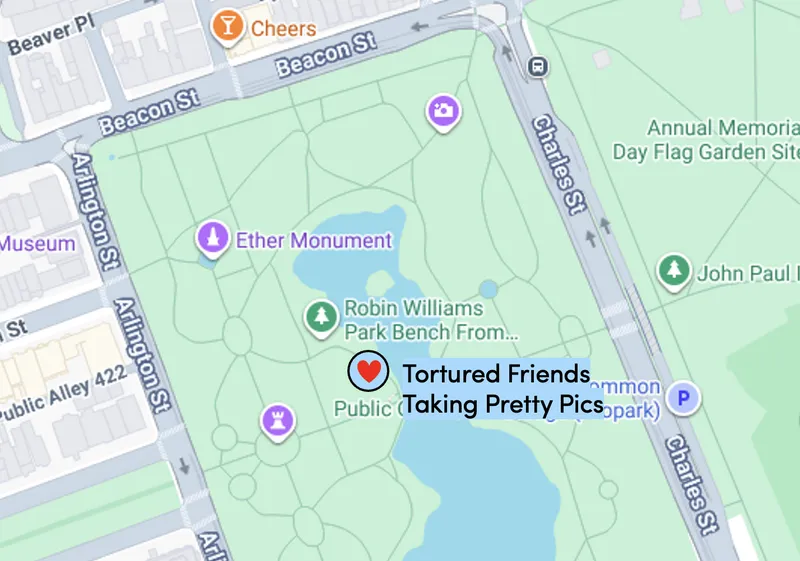
Response to AI slop is from Robin Williams
Robin Williams' character in Good Will Hunting addresses the challenges of AI-generated noise and overwhelming online advice. The scene emphasizes the importance of genuine human connection and understanding amidst the chaos of digital content.
jayacunzo.com
9 min
6/28/2026

You are falling behind because you haven't fed the insincerity machine
Social media has evolved from its original intent into a platform that often lacks genuine human interaction, becoming automated and weaponized. A newsletter with over 200,000 subscribers is currently being managed to address these changes in the social web landscape.
christianheilmann.com
4 min
3/30/2026
Finger: Social network that never died
Finger is a network protocol created at Stanford’s Artificial Intelligence Laboratory in 1971 to show who was using a shared WAITS time-sharing computer, including names, locations and terminal idle time. Ken Harrenstien formalized it in RFC 742 in 1977, and RFC 1288 became its definitive specification in 1991. A Finger client connects to a server’s TCP port 79, sends a username or an empty query, receives plain text, and closes the connection. Finger servers commonly returned users’ .plan and .project text files, originally intended to describe current work and plans. Users turned .plan files into public diaries, technical logs, jokes and other personal publishing. John Carmack used a .plan file from 1996 to 2010 as a development journal and announced plans to release Doom’s source code there on August 18, 1997. Carnegie Mellon students also exposed a Coca-Cola machine’s stock and bottle-cooling data through Finger around 1982. Security and privacy concerns drove Finger’s decline, particularly after the 1988 Morris worm exploited a fingerd buffer overflow. Some systems still include Finger clients, including Windows’ finger.exe, which attackers abused in 2020 to retrieve malware payloads. Current services and software, including Happy Net Box, Finger.Farm and plan.cat, continue to host and modernize .plan-style publishing; plan.cat also bridges Finger posts to ActivityPub.
en.andros.dev
16 min
8/18/2026
Response to AI slop is from Robin Williams
Robin Williams' character in Good Will Hunting addresses the challenges of AI-generated noise and overwhelming online advice. The scene emphasizes the importance of genuine human connection and understanding amidst the chaos of digital content.
jayacunzo.com
9 min
6/28/2026
A font that humans can read but AI cannot
Ghost Font is an anti-AI font designed to be readable by humans but not by leading AI models. It utilizes motion, video, noise, and decoys to convey messages uniquely.
mixfont.com
5 min
7/11/2026
You are falling behind because you haven't fed the insincerity machine
Social media has evolved from its original intent into a platform that often lacks genuine human interaction, becoming automated and weaponized. A newsletter with over 200,000 subscribers is currently being managed to address these changes in the social web landscape.
christianheilmann.com
4 min
3/30/2026
Finger: Social network that never died
Finger is a network protocol created at Stanford’s Artificial Intelligence Laboratory in 1971 to show who was using a shared WAITS time-sharing computer, including names, locations and terminal idle time. Ken Harrenstien formalized it in RFC 742 in 1977, and RFC 1288 became its definitive specification in 1991. A Finger client connects to a server’s TCP port 79, sends a username or an empty query, receives plain text, and closes the connection. Finger servers commonly returned users’ .plan and .project text files, originally intended to describe current work and plans. Users turned .plan files into public diaries, technical logs, jokes and other personal publishing. John Carmack used a .plan file from 1996 to 2010 as a development journal and announced plans to release Doom’s source code there on August 18, 1997. Carnegie Mellon students also exposed a Coca-Cola machine’s stock and bottle-cooling data through Finger around 1982. Security and privacy concerns drove Finger’s decline, particularly after the 1988 Morris worm exploited a fingerd buffer overflow. Some systems still include Finger clients, including Windows’ finger.exe, which attackers abused in 2020 to retrieve malware payloads. Current services and software, including Happy Net Box, Finger.Farm and plan.cat, continue to host and modernize .plan-style publishing; plan.cat also bridges Finger posts to ActivityPub.
en.andros.dev
16 min
8/18/2026
You are falling behind because you haven't fed the insincerity machine
Social media has evolved from its original intent into a platform that often lacks genuine human interaction, becoming automated and weaponized. A newsletter with over 200,000 subscribers is currently being managed to address these changes in the social web landscape.
christianheilmann.com
4 min
3/30/2026
Response to AI slop is from Robin Williams
Robin Williams' character in Good Will Hunting addresses the challenges of AI-generated noise and overwhelming online advice. The scene emphasizes the importance of genuine human connection and understanding amidst the chaos of digital content.
jayacunzo.com
9 min
6/28/2026
No more articles to load