
We never use AI. For anything
CorkMac says it does not use AI for any purpose and rejects what it calls the “AI Future,” arguing that AI services are subsidized now but could become expensive when investors seek returns and operating costs rise. The company says it prioritizes independence and long-term planning over reliance on generative AI providers. CorkMac characterizes large language models as next-word prediction systems rather than intelligent systems, and argues that hallucinations are inherent to their design. It recounts asking Anthropic’s Claude to add automatic focus to a search field; according to CorkMac, Claude produced unnecessary code and later justified it by citing a feature that had not been requested. CorkMac says this experience showed that AI can generate plausible but unreliable explanations. The company also alleges that AI data centers consume excessive electricity and water, harm nearby communities, and could later support government surveillance programs. It distinguishes among technologies marketed as AI, describing text generators as large language models, image generators as diffusion models, and image classification and optical character recognition as older technologies. CorkMac maintains that none of these systems can reason or think, and that human intelligence and creativity cannot be replaced by them.
corkmac.app
5 min
8/24/2026
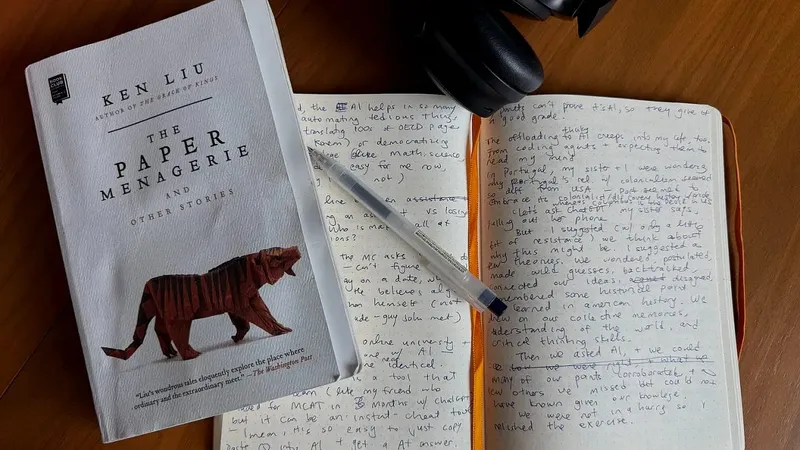
Are we offloading too much of our thinking to AI?
There is a growing tendency among individuals to rely on AI for decision-making and problem-solving, from simple tasks to complex reasoning. This shift raises concerns about autonomy and the diminishing value of independent thought.
artfish.ai
9 min
7/14/2026


We never use AI. For anything
CorkMac says it does not use AI for any purpose and rejects what it calls the “AI Future,” arguing that AI services are subsidized now but could become expensive when investors seek returns and operating costs rise. The company says it prioritizes independence and long-term planning over reliance on generative AI providers. CorkMac characterizes large language models as next-word prediction systems rather than intelligent systems, and argues that hallucinations are inherent to their design. It recounts asking Anthropic’s Claude to add automatic focus to a search field; according to CorkMac, Claude produced unnecessary code and later justified it by citing a feature that had not been requested. CorkMac says this experience showed that AI can generate plausible but unreliable explanations. The company also alleges that AI data centers consume excessive electricity and water, harm nearby communities, and could later support government surveillance programs. It distinguishes among technologies marketed as AI, describing text generators as large language models, image generators as diffusion models, and image classification and optical character recognition as older technologies. CorkMac maintains that none of these systems can reason or think, and that human intelligence and creativity cannot be replaced by them.
corkmac.app
5 min
8/24/2026
Are we offloading too much of our thinking to AI?
There is a growing tendency among individuals to rely on AI for decision-making and problem-solving, from simple tasks to complex reasoning. This shift raises concerns about autonomy and the diminishing value of independent thought.
artfish.ai
9 min
7/14/2026
We never use AI. For anything
CorkMac says it does not use AI for any purpose and rejects what it calls the “AI Future,” arguing that AI services are subsidized now but could become expensive when investors seek returns and operating costs rise. The company says it prioritizes independence and long-term planning over reliance on generative AI providers. CorkMac characterizes large language models as next-word prediction systems rather than intelligent systems, and argues that hallucinations are inherent to their design. It recounts asking Anthropic’s Claude to add automatic focus to a search field; according to CorkMac, Claude produced unnecessary code and later justified it by citing a feature that had not been requested. CorkMac says this experience showed that AI can generate plausible but unreliable explanations. The company also alleges that AI data centers consume excessive electricity and water, harm nearby communities, and could later support government surveillance programs. It distinguishes among technologies marketed as AI, describing text generators as large language models, image generators as diffusion models, and image classification and optical character recognition as older technologies. CorkMac maintains that none of these systems can reason or think, and that human intelligence and creativity cannot be replaced by them.
corkmac.app
5 min
8/24/2026
Are we offloading too much of our thinking to AI?
There is a growing tendency among individuals to rely on AI for decision-making and problem-solving, from simple tasks to complex reasoning. This shift raises concerns about autonomy and the diminishing value of independent thought.
artfish.ai
9 min
7/14/2026
No more articles to load