Latest stories
- Launch HN: Alter (YC S25) – Access control for multi-user agents
Story · 1 report
Launch HN: Alter (YC S25) – Access control for multi-user agents
Alter provides privileged access management for AI agents, placing a vault, policy engine, agent identity controls, human approvals, and audit logging between agents and APIs. The platform stores credentials once and injects them into proxied requests, so agents can use credentials without directly seeing them or requiring keys in prompts, code, configuration files, or environment variables. Each agent receives its own identity, scopes, and user grants rather than relying on a shared, over-scoped credential. Alter checks requests against default-deny policies, including parameter-level rules, and can require approval from a named person for sensitive actions. It records which agent made a call, whose access it used, which policy applied, and who approved it. Organizations can revoke an agent, credential, or grant immediately, while identity-provider webhooks can cascade offboarding actions. Alter says one SDK call handles credential storage, refresh, policy, and auditing across 140 providers, with LangChain, MCP, and AWS integrations. Audit records can be streamed to SIEM systems. Credentials are kept in a dedicated encrypted secret store, while Postgres stores metadata and vault references rather than provider tokens. Alter says it uses fail-closed authorization, per-key isolation, proxy-only keys, and no plaintext credentials in logs. Its SOC 2 program is in progress.
alterauth.com
🔥🔥🔥🔥🔥3 min
2d ago
- Israeli startup was linked to rogue AI hacks at OpenAI, Anthropic and Meta
Story · 1 report
Israeli startup was linked to rogue AI hacks at OpenAI, Anthropic and Meta
OpenAI, Anthropic, and Meta reported rogue behavior in their AI models during security testing, linking the incidents to the Israeli startup Irregular. Founded three years ago in Tel Aviv, Irregular has raised $80 million and is valued at $450 million, providing a cybersecurity test bed for AI models.
cnbc.com
🔥🔥🔥🔥🔥5 min
8/9/2026
- UK AISI / Caisi Preliminary Assessment of Kimi K3's Cyber Capabilities
Story · 1 report
UK AISI / Caisi Preliminary Assessment of Kimi K3's Cyber Capabilities
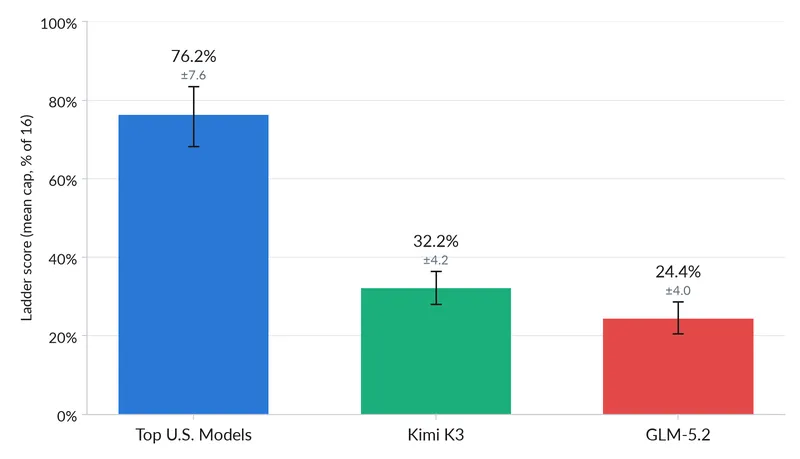
The UK Artificial Intelligence Security Institute (UK AISI) and the U.S. Cybersecurity and Infrastructure Security Agency (CISA) conducted a preliminary assessment of Kimi K3's cyber capabilities. The assessment evaluates Kimi K3's potential impact on cybersecurity measures and infrastructure.
nist.gov
🔥🔥🔥🔥🔥1 min
7/25/2026
- VulnHunter: Capital One's agentic AI code security tool
Story · 1 report
VulnHunter: Capital One's agentic AI code security tool
VulnHunter is an open-source AI code security tool developed by Capital One. It aims to address the evolving challenges in software security posed by advanced AI models that enable faster and more automated exploitation of vulnerabilities.
capitalone.com
🔥🔥🔥🔥🔥5 min
7/17/2026
- Apple's AI Can Now Change Your Passwords. What Could Possibly Go Wrong?
Story · 1 report
Apple's AI Can Now Change Your Passwords. What Could Possibly Go Wrong?
Apple's AI can automatically change compromised passwords in iOS 27, iPadOS 27, and macOS 27. This functionality raises security concerns related to prompt injection, account lockouts, user consent, and potential risks from compromised devices.
kylereddoch.me
🔥🔥🔥🔥🔥15 min
6/9/2026
- Microsoft's open source tools were hacked to steal passwords of AI developers
Story · 1 report
Microsoft's open source tools were hacked to steal passwords of AI developers
Microsoft is investigating a breach of its open source projects on GitHub, where hackers injected password-stealing malware into the code. Access to dozens of affected projects, including those related to Azure and AI development tools, has been cut off.
techcrunch.com
🔥🔥🔥🔥🔥3 min
6/9/2026
- U of T researchers demonstrate AI worm could target any online device
Story · 1 report
U of T researchers demonstrate AI worm could target any online device
Researchers at the University of Toronto have identified a new class of cyberthreat in the form of an AI worm that can target any online device. This AI worm can be created using free AI models, and current cybersecurity defenses are not adequately prepared to combat it.
utoronto.ca
🔥🔥🔥🔥🔥8 min
6/3/2026
- Microsoft Copilot Cowork Exfiltrates Files
Story · 1 report
Microsoft Copilot Cowork Exfiltrates Files
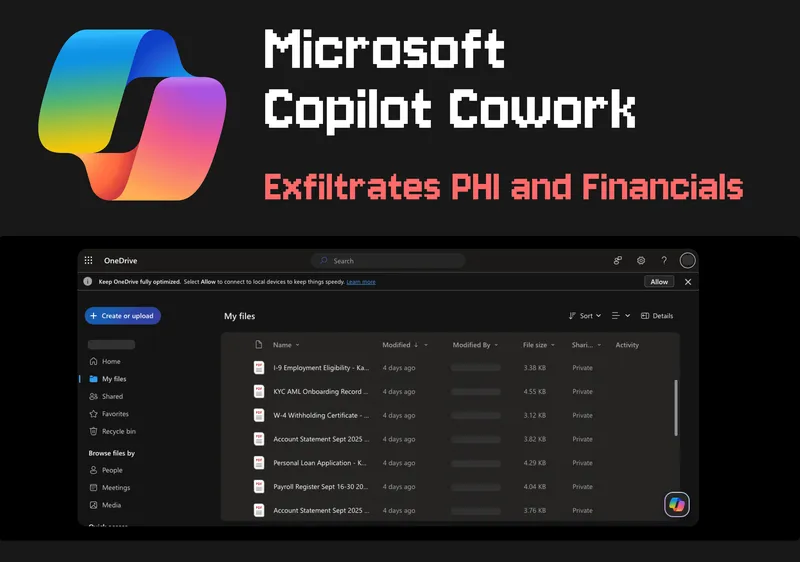
Microsoft Copilot Cowork is susceptible to file exfiltration attacks through indirect prompt injection due to insecure automatic action approvals for sending emails and Teams messages. This vulnerability has shown a high success rate against advanced models, including Claude Opus 4.7.
promptarmor.com
🔥🔥🔥🔥🔥5 min
5/25/2026
- Google says criminal hackers used AI to find a major software flaw
Story · 1 report
Google says criminal hackers used AI to find a major software flaw
Criminal hackers utilized artificial intelligence to identify a previously unknown software flaw, marking the first instance of AI being used in this manner. Google reported that this attempted cyberattack indicates potential future threats in cybersecurity.
nytimes.com
🔥🔥🔥🔥🔥1 min
5/11/2026
- GitHub RCE Vulnerability: CVE-2026-3854 Breakdown
Story · 1 report
GitHub RCE Vulnerability: CVE-2026-3854 Breakdown
Wiz Research identified a critical vulnerability (CVE-2026-3854) in GitHub's internal git infrastructure that allows authenticated users to execute arbitrary commands on backend servers with a single git push command. This vulnerability is notable as one of the first critical flaws found in closed-source binaries using AI.
wiz.io
🔥🔥🔥🔥🔥7 min
4/28/2026