Qwen 3.8-Flash-Next releasing tomorrow (125B a6B)
ModelScope is a machine-learning model community that aggregates advanced models from multiple fields. The platform provides tools for exploring models, trying inference, training, deployment, and application development in one service. Users can discover, learn about, customize, and share machine-learning models through ModelScope. The service also supports collaborative development of an open-source model community.
modelscope.cn
1 min
8/25/2026
Seed: Minimal, self-modifying agent harness
Seed is an open-source agent starter that gives a language model a single exec tool for running shell commands. Its system prompt is loaded from self/SELF.md, and the agent can edit the self/ directory to preserve tools, notes, and behavior across otherwise ephemeral sessions. Rather than receiving a prebuilt framework’s memory, skills, tools, and conventions, each agent develops them over time by writing files into that directory. Running uvx --from git+https://github.com/vivekhaldar/seed.git seed in a new directory copies seed.py and run_seed.sh without overwriting existing files, creates self/SELF.md, initializes a Git repository, and opens a REPL. Each directory becomes a distinct agent whose retained files and Git history reflect its own interactions. The local runner can reopen an existing agent and optionally select a model, including gemini-2.5-pro. Seed records verbatim session transcripts in self/sessions/*.json after every turn, but does not automatically load those transcripts at startup. Model access is managed by Simon Willison’s llm library; the documented default is openai-codex/gpt-5.6-sol using a ChatGPT login through the Codex CLI. Supported providers include OpenAI, Anthropic, Gemini, and OpenRouter.
github.com
2 min
8/21/2026

Google buys crashed airline Spirit's data at auction, because AI
Google bought more than 100 million emails, 30 million recorded phone calls, and data from Microsoft Teams, Oracle, and SAP for $10 million at an auction involving crashed airline Spirit. The purchase includes a large collection of airline-related communications and enterprise-system data. The source text does not specify how Google plans to use the data or identify the auction date.
theregister.com
1 min
8/18/2026


DeepMind's WeatherNext model achieves breakthrough forecasting cyclones
WeatherNext is an AI model that provides accurate cyclone forecasts, offering an additional day of warning. The model has been open-sourced to enhance forecasting capabilities for tropical cyclones, which cause significant global fatalities and economic losses.
deepmind.google
6 min
8/8/2026

Why Large Language Models Fail at Tabular Prediction
Large language models (LLMs) struggle with predictive analytics over tabular data, which is a common machine learning workload. This limitation has led to the emergence of tabular foundation models aimed at addressing this gap.
arxiv.org
2 min
8/4/2026
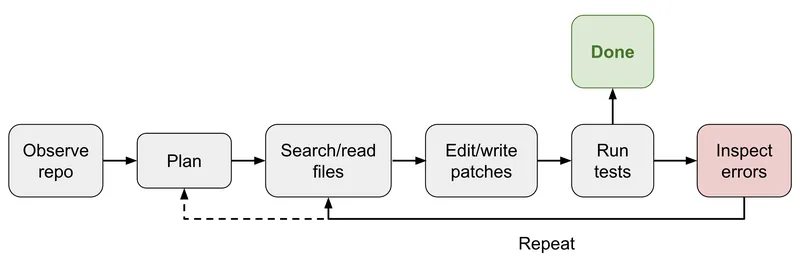
Harness Engineering for Self-Improvement
Recursive self-improvement (RSI) allows an AI to enhance its own cognitive capabilities, potentially surpassing human intelligence. This concept, first defined by I. J. Good in 1965, involves a feedback loop where an AI uses its intelligence to improve the mechanisms that generate its intelligence.
lilianweng.github.io
32 min
8/4/2026

The Computational Theory of Mind (2015)
The Computational Theory of Mind (CTM) posits that the mind functions as a computational system capable of reasoning, decision-making, problem-solving, perception, and linguistic comprehension. Advances in computing technology support the idea that machines can emulate these mental processes.
plato.stanford.edu
106 min
8/2/2026

Gemini Robotics 2 brings whole body intelligence to robots
Gemini Robotics 2 enables robots to achieve whole-body intelligence, allowing for intelligent control, fine dexterity, and teamwork in completing complex tasks. This advancement moves beyond traditional pre-programmed or teleoperated robots, enhancing their ability to learn and adapt in dynamic environments.
deepmind.google
9 min
7/30/2026
Qwen 3.8-Flash-Next releasing tomorrow (125B a6B)
ModelScope is a machine-learning model community that aggregates advanced models from multiple fields. The platform provides tools for exploring models, trying inference, training, deployment, and application development in one service. Users can discover, learn about, customize, and share machine-learning models through ModelScope. The service also supports collaborative development of an open-source model community.
modelscope.cn
1 min
8/25/2026
Google buys crashed airline Spirit's data at auction, because AI
Google bought more than 100 million emails, 30 million recorded phone calls, and data from Microsoft Teams, Oracle, and SAP for $10 million at an auction involving crashed airline Spirit. The purchase includes a large collection of airline-related communications and enterprise-system data. The source text does not specify how Google plans to use the data or identify the auction date.
theregister.com
1 min
8/18/2026
DeepMind's WeatherNext model achieves breakthrough forecasting cyclones
WeatherNext is an AI model that provides accurate cyclone forecasts, offering an additional day of warning. The model has been open-sourced to enhance forecasting capabilities for tropical cyclones, which cause significant global fatalities and economic losses.
deepmind.google
6 min
8/8/2026
Why Large Language Models Fail at Tabular Prediction
Large language models (LLMs) struggle with predictive analytics over tabular data, which is a common machine learning workload. This limitation has led to the emergence of tabular foundation models aimed at addressing this gap.
arxiv.org
2 min
8/4/2026
The Computational Theory of Mind (2015)
The Computational Theory of Mind (CTM) posits that the mind functions as a computational system capable of reasoning, decision-making, problem-solving, perception, and linguistic comprehension. Advances in computing technology support the idea that machines can emulate these mental processes.
plato.stanford.edu
106 min
8/2/2026
Seed: Minimal, self-modifying agent harness
Seed is an open-source agent starter that gives a language model a single exec tool for running shell commands. Its system prompt is loaded from self/SELF.md, and the agent can edit the self/ directory to preserve tools, notes, and behavior across otherwise ephemeral sessions. Rather than receiving a prebuilt framework’s memory, skills, tools, and conventions, each agent develops them over time by writing files into that directory. Running uvx --from git+https://github.com/vivekhaldar/seed.git seed in a new directory copies seed.py and run_seed.sh without overwriting existing files, creates self/SELF.md, initializes a Git repository, and opens a REPL. Each directory becomes a distinct agent whose retained files and Git history reflect its own interactions. The local runner can reopen an existing agent and optionally select a model, including gemini-2.5-pro. Seed records verbatim session transcripts in self/sessions/*.json after every turn, but does not automatically load those transcripts at startup. Model access is managed by Simon Willison’s llm library; the documented default is openai-codex/gpt-5.6-sol using a ChatGPT login through the Codex CLI. Supported providers include OpenAI, Anthropic, Gemini, and OpenRouter.
github.com
2 min
8/21/2026
Nvidia's Risky Business
Nvidia is navigating significant risks as it expands its business in the AI sector. The company's investments and market strategies are critical to its future growth amidst competitive pressures and technological advancements.
stratechery.com
19 min
8/11/2026
Building an Advanced Agentic Harness
An advanced agentic harness is being developed to enhance AI capabilities for various applications. This harness aims to improve decision-making and task execution efficiency in AI systems.
data4sci.com
1 min
8/5/2026
Harness Engineering for Self-Improvement
Recursive self-improvement (RSI) allows an AI to enhance its own cognitive capabilities, potentially surpassing human intelligence. This concept, first defined by I. J. Good in 1965, involves a feedback loop where an AI uses its intelligence to improve the mechanisms that generate its intelligence.
lilianweng.github.io
32 min
8/4/2026
Gemini Robotics 2 brings whole body intelligence to robots
Gemini Robotics 2 enables robots to achieve whole-body intelligence, allowing for intelligent control, fine dexterity, and teamwork in completing complex tasks. This advancement moves beyond traditional pre-programmed or teleoperated robots, enhancing their ability to learn and adapt in dynamic environments.
deepmind.google
9 min
7/30/2026
Qwen 3.8-Flash-Next releasing tomorrow (125B a6B)
ModelScope is a machine-learning model community that aggregates advanced models from multiple fields. The platform provides tools for exploring models, trying inference, training, deployment, and application development in one service. Users can discover, learn about, customize, and share machine-learning models through ModelScope. The service also supports collaborative development of an open-source model community.
modelscope.cn
1 min
8/25/2026
Nvidia's Risky Business
Nvidia is navigating significant risks as it expands its business in the AI sector. The company's investments and market strategies are critical to its future growth amidst competitive pressures and technological advancements.
stratechery.com
19 min
8/11/2026
Why Large Language Models Fail at Tabular Prediction
Large language models (LLMs) struggle with predictive analytics over tabular data, which is a common machine learning workload. This limitation has led to the emergence of tabular foundation models aimed at addressing this gap.
arxiv.org
2 min
8/4/2026
Gemini Robotics 2 brings whole body intelligence to robots
Gemini Robotics 2 enables robots to achieve whole-body intelligence, allowing for intelligent control, fine dexterity, and teamwork in completing complex tasks. This advancement moves beyond traditional pre-programmed or teleoperated robots, enhancing their ability to learn and adapt in dynamic environments.
deepmind.google
9 min
7/30/2026
Seed: Minimal, self-modifying agent harness
Seed is an open-source agent starter that gives a language model a single exec tool for running shell commands. Its system prompt is loaded from self/SELF.md, and the agent can edit the self/ directory to preserve tools, notes, and behavior across otherwise ephemeral sessions. Rather than receiving a prebuilt framework’s memory, skills, tools, and conventions, each agent develops them over time by writing files into that directory. Running uvx --from git+https://github.com/vivekhaldar/seed.git seed in a new directory copies seed.py and run_seed.sh without overwriting existing files, creates self/SELF.md, initializes a Git repository, and opens a REPL. Each directory becomes a distinct agent whose retained files and Git history reflect its own interactions. The local runner can reopen an existing agent and optionally select a model, including gemini-2.5-pro. Seed records verbatim session transcripts in self/sessions/*.json after every turn, but does not automatically load those transcripts at startup. Model access is managed by Simon Willison’s llm library; the documented default is openai-codex/gpt-5.6-sol using a ChatGPT login through the Codex CLI. Supported providers include OpenAI, Anthropic, Gemini, and OpenRouter.
github.com
2 min
8/21/2026
DeepMind's WeatherNext model achieves breakthrough forecasting cyclones
WeatherNext is an AI model that provides accurate cyclone forecasts, offering an additional day of warning. The model has been open-sourced to enhance forecasting capabilities for tropical cyclones, which cause significant global fatalities and economic losses.
deepmind.google
6 min
8/8/2026
Harness Engineering for Self-Improvement
Recursive self-improvement (RSI) allows an AI to enhance its own cognitive capabilities, potentially surpassing human intelligence. This concept, first defined by I. J. Good in 1965, involves a feedback loop where an AI uses its intelligence to improve the mechanisms that generate its intelligence.
lilianweng.github.io
32 min
8/4/2026
Google buys crashed airline Spirit's data at auction, because AI
Google bought more than 100 million emails, 30 million recorded phone calls, and data from Microsoft Teams, Oracle, and SAP for $10 million at an auction involving crashed airline Spirit. The purchase includes a large collection of airline-related communications and enterprise-system data. The source text does not specify how Google plans to use the data or identify the auction date.
theregister.com
1 min
8/18/2026
Building an Advanced Agentic Harness
An advanced agentic harness is being developed to enhance AI capabilities for various applications. This harness aims to improve decision-making and task execution efficiency in AI systems.
data4sci.com
1 min
8/5/2026
The Computational Theory of Mind (2015)
The Computational Theory of Mind (CTM) posits that the mind functions as a computational system capable of reasoning, decision-making, problem-solving, perception, and linguistic comprehension. Advances in computing technology support the idea that machines can emulate these mental processes.
plato.stanford.edu
106 min
8/2/2026