Ornith-1.0: self-improving open-source models for agentic coding
github.com
June 29, 2026
10 min read
60/100
Summary
Ornith-1.0 is an open-source self-improving model for agentic coding, available in configurations of 9B-Dense, 31B-Dense, 35B-MoE, and 397B-MoE. It achieves state-of-the-art performance on coding benchmarks such as Terminal-Bench 2.1, SWE-Bench, NL2Repo, and OpenClaw by utilizing reinforcement learning for solution generation.
Key Takeaways
- Ornith-1.0 is an open-source self-improving model for agentic coding, available in multiple configurations including 9B-Dense, 31B-Dense, 35B-MoE, and 397B-MoE.
- The model achieves state-of-the-art performance on coding benchmarks such as Terminal-Bench 2.1, SWE-Bench, NL2Repo, and OpenClaw, outperforming comparable open-source models.
- Ornith-1.0 utilizes a self-improving training framework that employs reinforcement learning to optimize both solution rollouts and the scaffolds that drive those rollouts.
- The model is MIT licensed, making it globally accessible and free from regional limitations.
Community Sentiment
Positives
- Ornith-1.0 is the first Qwen fine-tune that has gained acceptance in the local LLM community, indicating a shift towards more reliable models for coding tasks.
- Users have reported that Ornith-1.0 provides creative solutions to coding problems, showcasing its potential for practical applications in software development.
- The model's accessibility for local hardware makes it a viable option for a broader audience, potentially democratizing AI tools for coding.
Concerns
- There are concerns about the model's performance, particularly its tendency to hallucinate when used in chat without tools, raising questions about its reliability.
- Critics argue that the title 'self-improving' is misleading, as the model's improvements stem from its training process rather than its operational capabilities.
- Some users feel that the model is just a re-skinned version of existing models like Qwen or Gemma 4, suggesting a lack of innovation.
Related Articles
Ornith-1.5: From Self-Scaffolding to Self-Improvement
Aug 19, 2026
CEO fired developers to make room for AI. Developers create open source AI CEO
Aug 27, 2026

Step 3.5 Flash – Open-source foundation model, supports deep reasoning at speed
Feb 19, 2026
Qwen/Qwen3.8-2.4T-A95B
Aug 12, 2026
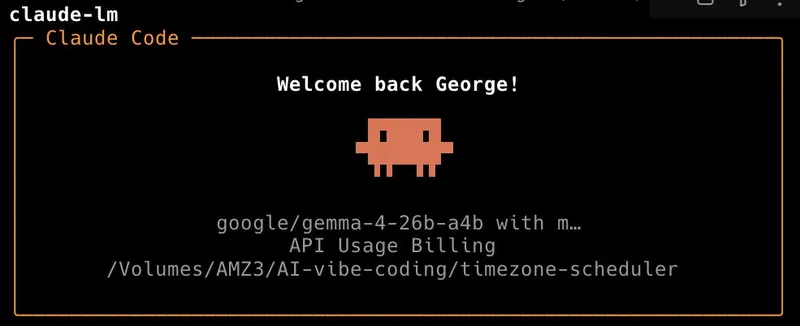
Running Gemma 4 locally with LM Studio's new headless CLI and Claude Code
Apr 5, 2026