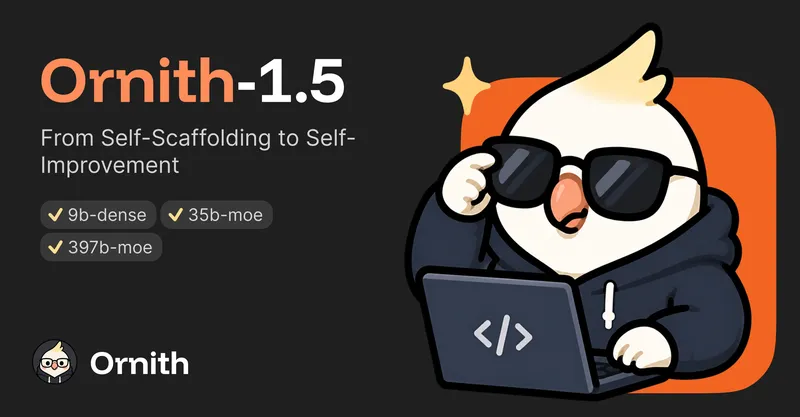
Ornith-1.5: From Self-Scaffolding to Self-Improvement
Ornith introduced Ornith-1.5, a family of 397B-parameter mixture-of-experts (MoE), 35B MoE, and 9B dense models trained through a self-improvement loop. The system generates progressively harder tasks, creates task-specific scaffolds containing instructions, tools, decomposition, and orchestration, then produces reinforcement-learning rollouts. Rewards optimize task generation, scaffold construction, and solutions jointly using validity, frontier difficulty, novelty, solution quality, and resistance to reward hacking. The target task success rate is 0.2, favoring problems difficult enough to expose capability gaps while still yielding successful training trajectories. Ornith reports that its 397B model scored 86.1 on Terminal-Bench 2.1 and 56.0 on DeepSWE, compared with 85.0 and 59.0 for Claude Opus 4.8. It scored 86.0 on SWE-bench Verified, 92.8 on GPQA Diamond, and 80.0 on MCP-Atlas. The 35B MoE model activates 3B parameters per token and scored 68.5 on Terminal-Bench 2.1 using Claude Code and 79.0 on SWE-bench Verified. The 9B model scored 47.0 and 70.6 on those benchmarks, respectively; Ornith says its quantized Mobile version can run on iPhone and Android devices. Ornith reports that its benchmark results are averaged over five independent runs.
ornith.ai
11 min
8/19/2026

Kimi Linear: An Expressive, Efficient Attention Architecture
Kimi Linear is a hybrid linear attention architecture that outperforms full attention in short-context, long-context, and reinforcement learning scenarios. It utilizes Kimi Delta Attention to achieve this efficiency.
arxiv.org
2 min
7/28/2026
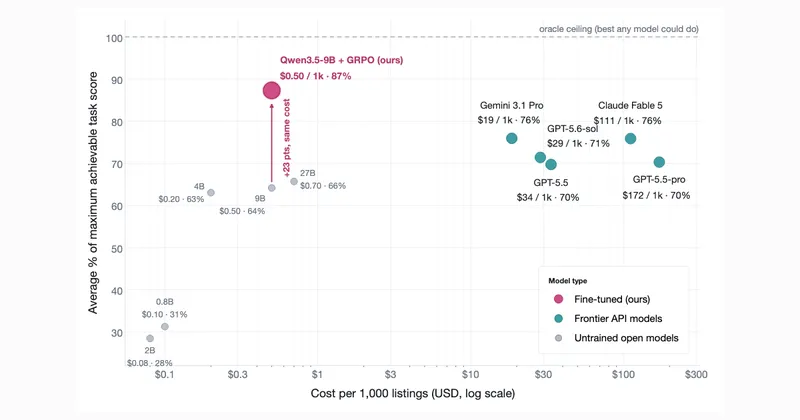
A $500 RL fine-tune of a 9B open model beat frontier models on catalog review
An open-source model combined with proprietary task data and reinforcement learning has been implemented in various real-world scenarios. Bridgewater Associates utilizes AI to analyze a continuous influx of documents to determine their relevance to investment strategies.
fermisense.com
2 min
7/28/2026
The Little Book of Reinforcement Learning
The Little Book of Reinforcement Learning provides a concise introduction to reinforcement learning concepts and algorithms. The associated GitHub repository includes the book, Pytorch-based implementations of various algorithms in the algos/ folder, and detailed explanations in the supplementary/ folder.
github.com
1 min
7/17/2026
Ring-Zero: Scaling Zero RL to a Trillion Parameters for Emergent Reasoning
Ring-Zero scales zero reinforcement learning (RL) to a trillion parameters, enabling emergent reasoning capabilities. This advancement addresses computational constraints that have limited previous studies in zero RL, which utilizes verifiable rewards without human-annotated data.
arxiv.org
2 min
7/16/2026

Is One Layer Enough? A Single Transformer Layer Matches Full-Parameter RL Train
Training a single transformer layer can achieve performance comparable to full-parameter reinforcement learning (RL) training. This finding suggests that RL adaptation may not require uniform updates across all layers of large language models.
arxiv.org
2 min
7/2/2026
Ornith-1.0: self-improving open-source models for agentic coding
Ornith-1.0 is an open-source self-improving model for agentic coding, available in configurations of 9B-Dense, 31B-Dense, 35B-MoE, and 397B-MoE. It achieves state-of-the-art performance on coding benchmarks such as Terminal-Bench 2.1, SWE-Bench, NL2Repo, and OpenClaw by utilizing reinforcement learning for solution generation.
github.com
10 min
6/30/2026

DeepSeek-V4 on Day 0: From Fast Inference to Verified RL with SGLang and Miles
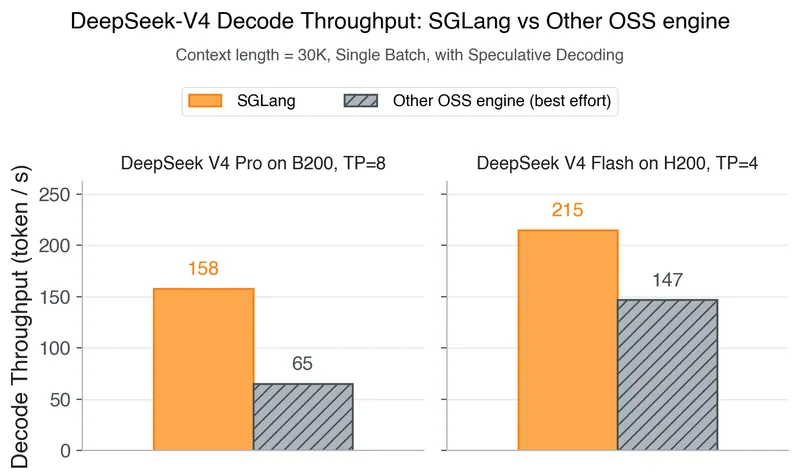
DeepSeek-V4 is now supported for both inference and reinforcement learning (RL) training from Day 0. SGLang and Miles provide the first open-source stack designed for DeepSeek-V4’s hybrid sparse-attention architecture and manifold-constrained hyper-connections, utilizing FP4 expert weights.
lmsys.org
17 min
4/25/2026
Ornith-1.5: From Self-Scaffolding to Self-Improvement
Ornith introduced Ornith-1.5, a family of 397B-parameter mixture-of-experts (MoE), 35B MoE, and 9B dense models trained through a self-improvement loop. The system generates progressively harder tasks, creates task-specific scaffolds containing instructions, tools, decomposition, and orchestration, then produces reinforcement-learning rollouts. Rewards optimize task generation, scaffold construction, and solutions jointly using validity, frontier difficulty, novelty, solution quality, and resistance to reward hacking. The target task success rate is 0.2, favoring problems difficult enough to expose capability gaps while still yielding successful training trajectories. Ornith reports that its 397B model scored 86.1 on Terminal-Bench 2.1 and 56.0 on DeepSWE, compared with 85.0 and 59.0 for Claude Opus 4.8. It scored 86.0 on SWE-bench Verified, 92.8 on GPQA Diamond, and 80.0 on MCP-Atlas. The 35B MoE model activates 3B parameters per token and scored 68.5 on Terminal-Bench 2.1 using Claude Code and 79.0 on SWE-bench Verified. The 9B model scored 47.0 and 70.6 on those benchmarks, respectively; Ornith says its quantized Mobile version can run on iPhone and Android devices. Ornith reports that its benchmark results are averaged over five independent runs.
ornith.ai
11 min
8/19/2026
A $500 RL fine-tune of a 9B open model beat frontier models on catalog review
An open-source model combined with proprietary task data and reinforcement learning has been implemented in various real-world scenarios. Bridgewater Associates utilizes AI to analyze a continuous influx of documents to determine their relevance to investment strategies.
fermisense.com
2 min
7/28/2026
Ring-Zero: Scaling Zero RL to a Trillion Parameters for Emergent Reasoning
Ring-Zero scales zero reinforcement learning (RL) to a trillion parameters, enabling emergent reasoning capabilities. This advancement addresses computational constraints that have limited previous studies in zero RL, which utilizes verifiable rewards without human-annotated data.
arxiv.org
2 min
7/16/2026
Is One Layer Enough? A Single Transformer Layer Matches Full-Parameter RL Train
Training a single transformer layer can achieve performance comparable to full-parameter reinforcement learning (RL) training. This finding suggests that RL adaptation may not require uniform updates across all layers of large language models.
arxiv.org
2 min
7/2/2026
Kimi Linear: An Expressive, Efficient Attention Architecture
Kimi Linear is a hybrid linear attention architecture that outperforms full attention in short-context, long-context, and reinforcement learning scenarios. It utilizes Kimi Delta Attention to achieve this efficiency.
arxiv.org
2 min
7/28/2026
The Little Book of Reinforcement Learning
The Little Book of Reinforcement Learning provides a concise introduction to reinforcement learning concepts and algorithms. The associated GitHub repository includes the book, Pytorch-based implementations of various algorithms in the algos/ folder, and detailed explanations in the supplementary/ folder.
github.com
1 min
7/17/2026
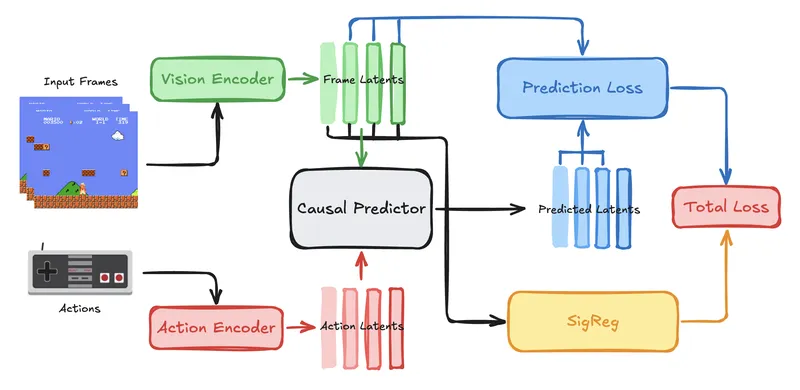
LeMario: Training a JEPA World Model on Super Mario Bros
LeMario is a Joint-Embedding Predictive Architecture (JEPA) model trained on Super Mario Bros to learn world dynamics from pixels and actions. The model successfully passed all initial tests.
benjamin-bai.com
11 min
7/14/2026
Ornith-1.0: self-improving open-source models for agentic coding
Ornith-1.0 is an open-source self-improving model for agentic coding, available in configurations of 9B-Dense, 31B-Dense, 35B-MoE, and 397B-MoE. It achieves state-of-the-art performance on coding benchmarks such as Terminal-Bench 2.1, SWE-Bench, NL2Repo, and OpenClaw by utilizing reinforcement learning for solution generation.
github.com
10 min
6/30/2026
DeepSeek-V4 on Day 0: From Fast Inference to Verified RL with SGLang and Miles
DeepSeek-V4 is now supported for both inference and reinforcement learning (RL) training from Day 0. SGLang and Miles provide the first open-source stack designed for DeepSeek-V4’s hybrid sparse-attention architecture and manifold-constrained hyper-connections, utilizing FP4 expert weights.
lmsys.org
17 min
4/25/2026
Ornith-1.5: From Self-Scaffolding to Self-Improvement
Ornith introduced Ornith-1.5, a family of 397B-parameter mixture-of-experts (MoE), 35B MoE, and 9B dense models trained through a self-improvement loop. The system generates progressively harder tasks, creates task-specific scaffolds containing instructions, tools, decomposition, and orchestration, then produces reinforcement-learning rollouts. Rewards optimize task generation, scaffold construction, and solutions jointly using validity, frontier difficulty, novelty, solution quality, and resistance to reward hacking. The target task success rate is 0.2, favoring problems difficult enough to expose capability gaps while still yielding successful training trajectories. Ornith reports that its 397B model scored 86.1 on Terminal-Bench 2.1 and 56.0 on DeepSWE, compared with 85.0 and 59.0 for Claude Opus 4.8. It scored 86.0 on SWE-bench Verified, 92.8 on GPQA Diamond, and 80.0 on MCP-Atlas. The 35B MoE model activates 3B parameters per token and scored 68.5 on Terminal-Bench 2.1 using Claude Code and 79.0 on SWE-bench Verified. The 9B model scored 47.0 and 70.6 on those benchmarks, respectively; Ornith says its quantized Mobile version can run on iPhone and Android devices. Ornith reports that its benchmark results are averaged over five independent runs.
ornith.ai
11 min
8/19/2026
The Little Book of Reinforcement Learning
The Little Book of Reinforcement Learning provides a concise introduction to reinforcement learning concepts and algorithms. The associated GitHub repository includes the book, Pytorch-based implementations of various algorithms in the algos/ folder, and detailed explanations in the supplementary/ folder.
github.com
1 min
7/17/2026
Is One Layer Enough? A Single Transformer Layer Matches Full-Parameter RL Train
Training a single transformer layer can achieve performance comparable to full-parameter reinforcement learning (RL) training. This finding suggests that RL adaptation may not require uniform updates across all layers of large language models.
arxiv.org
2 min
7/2/2026
DeepSeek-V4 on Day 0: From Fast Inference to Verified RL with SGLang and Miles
DeepSeek-V4 is now supported for both inference and reinforcement learning (RL) training from Day 0. SGLang and Miles provide the first open-source stack designed for DeepSeek-V4’s hybrid sparse-attention architecture and manifold-constrained hyper-connections, utilizing FP4 expert weights.
lmsys.org
17 min
4/25/2026
Kimi Linear: An Expressive, Efficient Attention Architecture
Kimi Linear is a hybrid linear attention architecture that outperforms full attention in short-context, long-context, and reinforcement learning scenarios. It utilizes Kimi Delta Attention to achieve this efficiency.
arxiv.org
2 min
7/28/2026
Ring-Zero: Scaling Zero RL to a Trillion Parameters for Emergent Reasoning
Ring-Zero scales zero reinforcement learning (RL) to a trillion parameters, enabling emergent reasoning capabilities. This advancement addresses computational constraints that have limited previous studies in zero RL, which utilizes verifiable rewards without human-annotated data.
arxiv.org
2 min
7/16/2026
Ornith-1.0: self-improving open-source models for agentic coding
Ornith-1.0 is an open-source self-improving model for agentic coding, available in configurations of 9B-Dense, 31B-Dense, 35B-MoE, and 397B-MoE. It achieves state-of-the-art performance on coding benchmarks such as Terminal-Bench 2.1, SWE-Bench, NL2Repo, and OpenClaw by utilizing reinforcement learning for solution generation.
github.com
10 min
6/30/2026
A $500 RL fine-tune of a 9B open model beat frontier models on catalog review
An open-source model combined with proprietary task data and reinforcement learning has been implemented in various real-world scenarios. Bridgewater Associates utilizes AI to analyze a continuous influx of documents to determine their relevance to investment strategies.
fermisense.com
2 min
7/28/2026
LeMario: Training a JEPA World Model on Super Mario Bros
LeMario is a Joint-Embedding Predictive Architecture (JEPA) model trained on Super Mario Bros to learn world dynamics from pixels and actions. The model successfully passed all initial tests.
benjamin-bai.com
11 min
7/14/2026